
 Book Call with Haroon
SaaS Revenue Alignment is becoming more important than ever. The SaaS market is growing very fast. It was worth $266 billion in 2024, and experts say it could reach $1.13 trillion by 2032. But many SaaS companies do not benefit from this growth. One big reason is that their marketing, sales, and product teams work separately instead of together.
Research shows that companies with strong product marketing teams are growing faster. This proves that aligning marketing, sales, and product teams is key to steady revenue growth. When teams work alone, they miss chances to grow. They struggle to give customers a smooth experience, improve sales, and build products people actually want.
This guide explains simple and proven ways to break down team barriers. You will learn how to set shared goals, understand the customer journey together, and build team structures that grow with your SaaS business.
The Problem with Poor SaaS Revenue Alignment
Many SaaS companies struggle because their teams work in silos, and they don’t have SaaS Revenue Alignment. This means teams don’t share information or work closely together. Silos may seem small at first, but they become very expensive over time.
Why misalignment slows down growth
When teams are not aligned, the whole business suffers. Poor teamwork lowers productivity and reduces profits. Just poor SaaS Revenue Alignment between sales and marketing can cost a company 10% or more of its yearly revenue, even if the company is growing fast.
Studies show that better teamwork saves money. Deloitte found that companies save $1,660 per employee each year by improving collaboration. For a SaaS company with 50 employees, that’s $83,000 saved every year.
Aligned teams also grow faster and keep customers longer. Research from Forrester shows that aligned companies see 2.4 times more revenue growth and are twice as profitable as companies where teams are not aligned.
Common problems between marketing, sales, and product
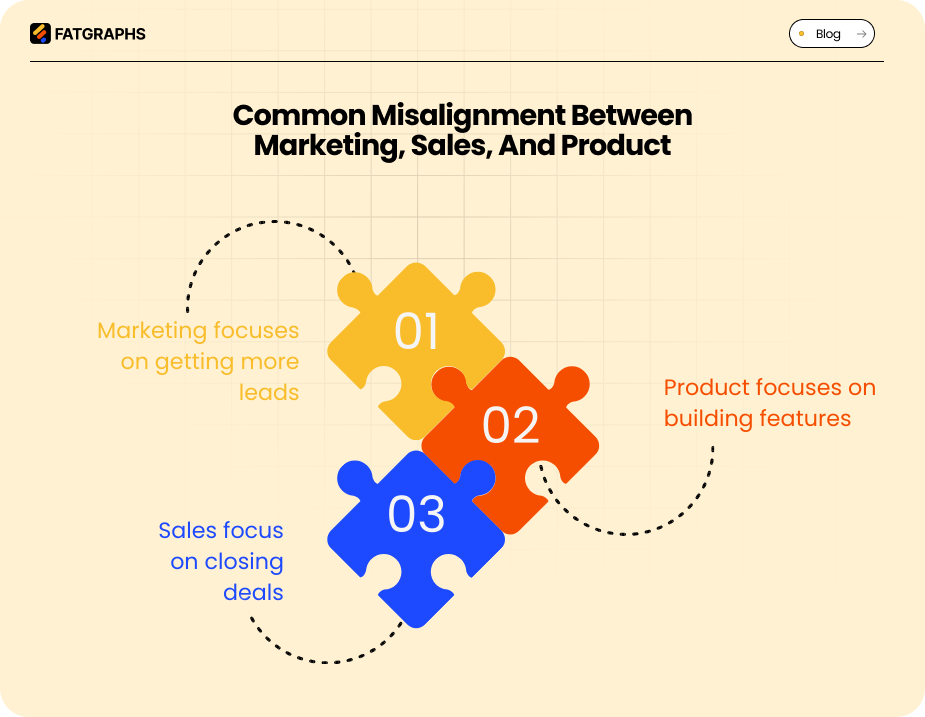
SaaS Revenue Alignment problems usually show up in these ways:
Marketing focuses on getting more leads, sales focus on closing deals, and product focuses on building features. Each team cares about its own goals, not the customer’s full experience. Teams use different tools and systems, so important data is scattered and hard to share.
Messages are inconsistent. The website says one thing, sales say another, and the product works differently. This confuses customers. Teams don’t share responsibility. When things go wrong, teams blame each other instead of fixing the problem together.
1- Real effects of poor teamwork
Poor collaboration hurts daily work. Almost half of businesses say customer experience suffers because teams don’t work well together. Employee productivity drops by 40%, and 38% of companies lose deals because of poor teamwork. Teams waste time searching through emails, tools, and spreadsheets. Marketing spends money on the wrong audience, while sales don’t know which leads are best.
Customers feel the impact too. They hear the same message again, get sales pitches that don’t match marketing promises, and face confusing onboarding experiences. This leads to longer sales cycles, higher costs, and more customers leaving. Siloed teams don’t just cause small problems; they stop SaaS companies from reaching their full revenue potential.
What True SaaS Revenue Alignment Looks Like
When marketing, sales, and product teams work together, they become much stronger. SaaS revenue alignment is not just about teamwork; it changes how the whole company works and leads to real business results.
2- Shared understanding of the customer journey
Aligned companies see the customer journey as one smooth path. They track everything from first website visits to purchase and long-term use.
This helps teams understand how every interaction affects customer decisions. Companies with strong alignment close 38% more deals because they share the same ideal customer profile and focus on the right buyers.
3- Consistent messaging from start to finish
Aligned teams share one clear message at every stage. Marketing creates content that supports sales conversations. Sales match what marketing promises. The product delivers what both teams are talking about.
Companies with strong alignment are 67% better at closing deals and keep 58% more customers. They also earn 208% more revenue from marketing because customers enjoy a smoother buying experience.
4- Planning and working together across teams
True SaaS revenue alignment means teams plan and execute together. This includes:
- Setting shared goals like revenue growth, pipeline value, and shorter sales cycles
- Using shared data systems so everyone sees the same information
- Holding regular meetings to share insights and solve problems
Companies that align their revenue teams grow 19% faster and are 15% more profitable. Over time, they can grow 24% faster and increase profits by 27%.
Steps to Align Marketing, Sales, and Product
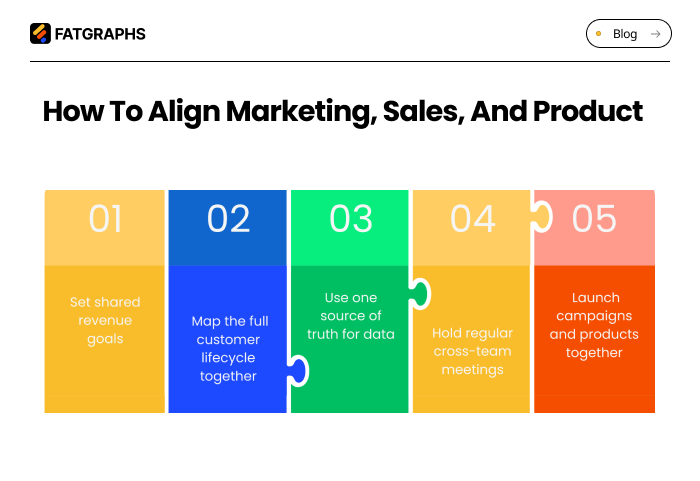
Here are five proven steps SaaS companies can use to align their teams.
1. Set shared revenue goals
All teams should work toward the same main goal: revenue. When everyone shares the same targets, teams naturally work together. Track shared metrics like customer acquisition cost, conversion rates, and ROI, so everyone knows their role.
2. Map the full customer lifecycle together
Create a clear map of the customer journey from first contact to long-term loyalty. Define who owns each stage. Marketing handles awareness, sales handles conversion, and customer success focuses on retention.
3. Use one source of truth for data
A single source of truth helps teams trust the same data. This removes confusion and helps leaders make better decisions. Start by organizing data sources and standardizing formats.
4. Hold regular cross-team meetings
Weekly or bi-weekly meetings help teams stay aligned. Monthly customer journey meetings with marketing, sales, product, and customer success improve collaboration even more.
5. Launch campaigns and products together
When teams work together on launches, messaging stays consistent. Use shared content calendars and RACI charts to clearly define responsibilities.
How to Keep Teams Aligned Over Time
SaaS Revenue Alignment is not a one-time task. It needs constant effort and improvement.
Use feedback to improve strategy
Customer feedback helps teams see what’s working and what’s not. Companies that focus on customer experience see 84% higher revenue growth. Surveys, reviews, and support feedback all matter.
Train teams regularly
SaaS products change often. Without regular training, teams fall out of sync. Ongoing learning helps everyone understand new features and workflows.
Leadership keeps alignment strong
Leaders set an example. When leaders encourage teamwork and shared goals, alignment becomes part of the company culture. Clear communication from leadership keeps teams focused.
Scale alignment as the company grows
As SaaS companies grow, a RevOps team becomes important. RevOps connects all revenue activities and keeps systems aligned. Automation and cross-team planning help alignment stay strong during fast growth.
Conclusion
SaaS Revenue alignment is the foundation of SaaS success today. When marketing, sales, and product teams work as one, companies grow faster, keep customers longer, and earn more revenue.
Misalignment is costly and risky. Customers see your company as one brand, not separate teams. Shared goals, clear data, regular communication, and joint campaigns create better experiences for everyone.
Alignment takes effort, but the rewards are worth it. Teams work better, customers stay longer, and businesses gain more market share. When marketing, sales, and products truly work together, SaaS companies don’t just survive; they grow and succeed.
FAQs
Q1. How does revenue alignment help SaaS growth?
Aligned teams grow faster and are more profitable. Companies with alignment see 2.4x higher revenue growth and better customer retention.
Q2. What are the main steps to align teams?
Set shared goals, map the customer journey, use shared data, hold regular meetings, and launch campaigns together.
Q3. How can alignment continue as companies grow?
Create a RevOps team, use automation, train employees regularly, and keep leadership involved.
Q4. Why is a shared customer journey important?
It helps teams deliver consistent messages and close more deals. Aligned teams close 38% more deals.
Q5. How does misalignment hurt revenue?
Poor alignment can cost 10% or more of yearly revenue. It leads to confusion, lower productivity, and lost customers.