
 Book Call with Haroon
At some point, almost every founder realizes that their growth metrics look better than their business feels. Traffic is rising, numbers are flashing green, yet decisions are still based on gut instinct. That’s because many startups end up chasing vanity metrics impressive on the surface, but disconnected from real progress. This is where the AARRR framework changes the conversation, shifting focus from “what looks good” to “what actually moves the business forward.”
The AARRR framework, also known as Pirate Metrics, tells the story of how users truly experience your product. It breaks the customer journey into five clear stages: Acquisition, Activation, Retention, Referral, and Revenue, helping you see where users engage, where they drop off, and where growth really comes from to improve SaaS acquisition performance. Instead of guessing, you gain clarity, build stronger acquisition strategies, and create sustainable growth grounded in real user behavior.
Define the Right Strategic Fit for SaaS Acquisition Performance
Finding the right strategic fit lays the foundation for successful SaaS acquisition performance. A genuine match creates value beyond just financial metrics. Let’s break down how to do this step by step.
1- Clarify Your Acquisition Goals
Start with a clear view of your priorities. Many founders focus only on valuation numbers, but the real success comes from matching bigger objectives. Think beyond just the money. Are you looking for a full exit or growth with a partner who shares your vision?
This clarity helps filter potential buyers and ensures your discussions are meaningful. Successful acquirers look at financial, strategic, and personal goals, not just chasing the highest offer.
2- Evaluate Market and Product Alignment
A strong strategic fit needs real market compatibility. The target company should complement what you already offer. This shows how the acquisition strengthens your position or opens new opportunities. Buyers want proof that your business can adapt as markets change, not just solve current problems.
3- Assess Cultural and Operational Compatibility
A lot of failed mergers point to cultural differences. Almost half of M&A practitioners say culture is why deals fall apart. Look beyond broad values. Spot specific “cultural fault lines” in decision-making, team engagement, and work processes. Operational fit matters too. Review team structure, internal processes, and automation tools carefully.
4- Identify Potential Synergies
Great acquisitions create value through synergies that companies can’t achieve alone. These come in three forms:
- Revenue synergies: cross-selling, market expansion, better product offerings
- Cost synergies: united functions, economies of scale, efficient operations
- Financial synergies: stronger balance sheets, lower capital costs, tax benefits
Build synergy estimates by business function. Link each benefit to a specific source with realistic timelines.
5- Conduct Background Check
Due diligence goes beyond numbers. For SaaS companies, study the customer base (demographics, satisfaction, renewal rates), review the team (structure, attrition, workflows), analyze tech stacks, and verify IP. Ask questions about strategy, team changes, and deal structure to build mutual understanding before moving forward.
Spot Automation Opportunities to Improve Acquisition
Automation can improve efficiency and results. Technology replaces manual tasks, frees up resources, and boosts performance.
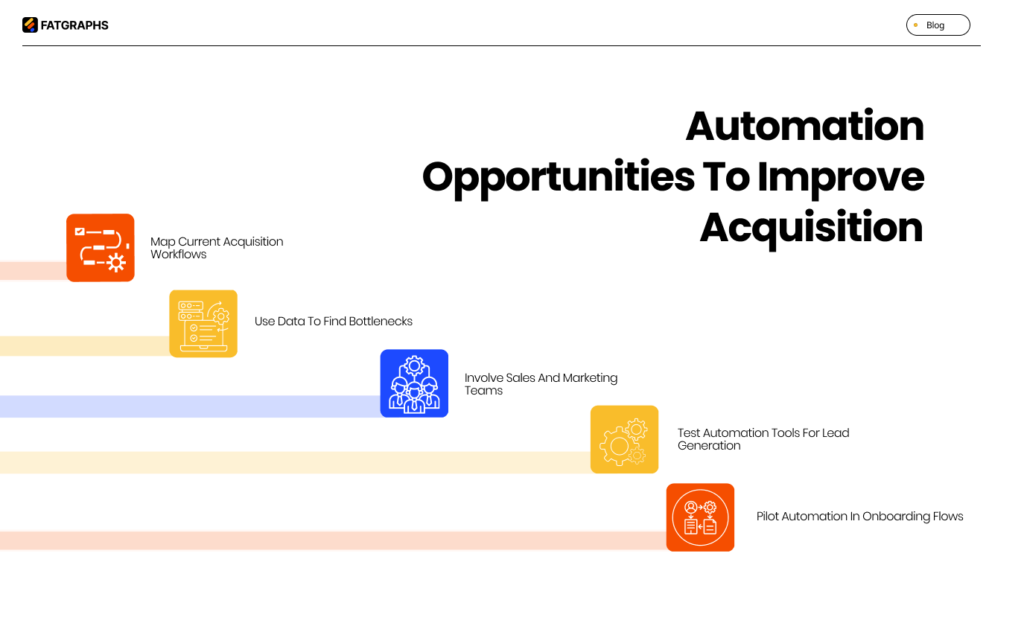
1- Map Current Acquisition Workflows
Start by mapping existing processes. Customer journey mapping shows all interactions with your product. Marketing, sales, product, and customer success teams should share data to document every touchpoint. This gives a clear view of where prospects engage or drop off and helps focus on key improvements.
2- Use Data to Find Bottlenecks
Once workflows are mapped, identify where prospects get stuck. Session replays reveal navigation issues, glitches, or confusing UI that drive users away. Track metrics like account registrations, first logins, product tours, and checklist completions to find friction points. Remember: 86% of customers stay longer with companies that offer strong onboarding and support.
3- Involve Sales and Marketing Teams
Collaboration drives successful automation. Marketing attracts users via blogs, SEO, webinars, and targeted ads. Sales provides insight into lead quality and conversion challenges. Together, they can create resource playbooks with talking points, objections, and success stories to help reps have more impactful conversations.
4- Test Automation Tools for Lead Generation
AI and analytics tools can help identify and engage potential customers. These tools analyze large datasets to predict behavior and enable targeted outreach. Marketing automation platforms, for example, can score contacts and segment high-intent leads into nurturing flows tailored to their needs.
5- Pilot Automation in Onboarding Flows
Start small. Automated onboarding sequences work best in controlled tests. Low-code platforms let QA teams write tests in simple English. Sandbox environments simulate login processes safely, ensuring proper redirects and secure token handling without risking real accounts.
Integrate Systems & Teams for Better Performance
Success depends on how well systems and teams work together. Research shows 30% of M&A transactions fail to hit targets due to cultural integration problems. Here’s how to prevent that.
1- Create a Unified Acquisition Roadmap
First, understand the tech landscape on both sides. Business units control up to 70% of SaaS spending in cloud environments. Major SaaS investors often lead innovation. Next, create an integration plan for each application based on contracts and business value.
2- Line Up Marketing, Sales, and Product Teams
Sales and marketing gaps are costly. Know how sales teams operate the messaging that attracts and converts prospects. Regular meetings align business and IT strategies. Your CRM should be the single source of truth with two-way syncing.
3- Prioritize High-Impact Systems
Focus on systems that truly matter:
- Customer-facing integrations that drive growth
- Tools that reduce errors and improve employee experience
- Applications that cut unnecessary SaaS spending
4- Train Teams on New Tools and Processes
Teams should know training requirements upfront. Nobody wants surprises about tools being retired soon. Regular performance reviews ensure what’s working and what needs adjustment.
Adopt Continuous Improvement for Long-Term Growth
A culture of continuous improvement drives sustainable SaaS growth. Leaders now balance profitability with responsible growth.
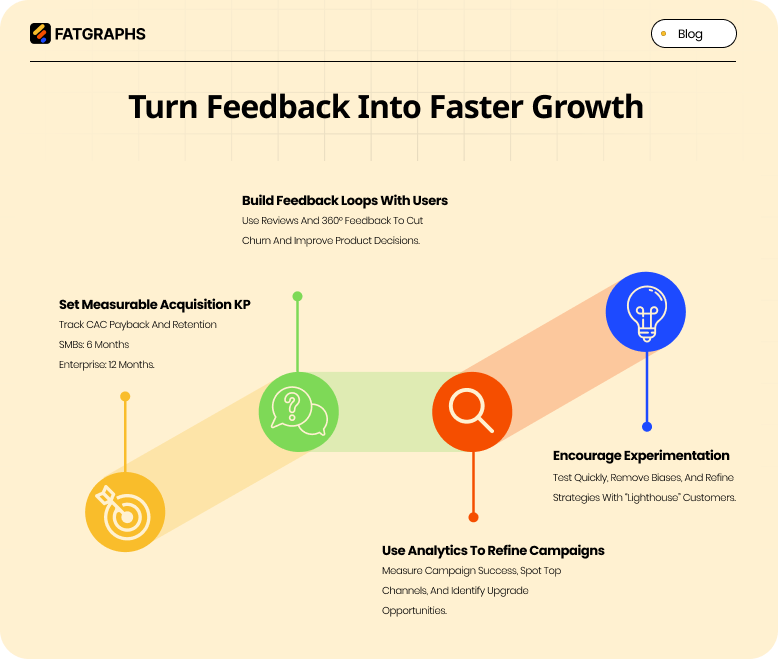
Set Measurable Acquisition KPIs
Traditional metrics like MRR are still useful, but the focus now is on retention and growth from existing customers. Track CAC payback periods and target the right segments. SMB results show 6 months, enterprise 12 months.
Build Feedback Loops with New Users
Customer feedback gives direct insights. 91% of customers say reviews should guide product decisions. 360-degree feedback helps reduce churn; 59% of customers reduced business after negative experiences.
Source: Zipdo
Use Analytics to Refine Campaigns
Analytics helps tailor strategies. Measure campaign effectiveness, identify top-performing channels, and spot customers who could upgrade.
Encourage Experimentation in Acquisition Tactics
Quick tests gather actionable data and remove biases from product decisions. Identify “lighthouse customers” (15% of early-stage users) and refine continuously.
Conclusion
Improving SaaS acquisition performance is more than marketing tricks. Strategic fit is the foundation. Clarify goals, review market alignment, and focus on automation. Integration and teamwork are critical. Unified roadmaps and cross-functional teams outperform siloed efforts. Early integration prevents cultural disconnects that derail 30% of deals.
Continuous improvement turns one-time wins into sustainable growth. KPIs, feedback loops, analytics, and experimentation create an environment where acquisition naturally scales. Start with one area, measure results, and expand. Your improved acquisition performance leads to stronger business outcomes and lasting growth.
FAQs
Q1. Key components of a successful SaaS acquisition strategy?
Define strategic fit, identify automation opportunities, integrate systems and teams, and adopt continuous improvement.
Q2. How can automation improve SaaS acquisition performance?
Streamlines workflows, reduces manual tasks, improves efficiency, and lets teams focus on high-value activities while keeping customer experiences personalized.
Q3. Why is system integration important in SaaS acquisitions?
It aligns cross-functional teams, creates a unified roadmap, and prevents cultural disconnects that can derail deals.
Q4. Role of continuous improvement in SaaS acquisition?
It ensures sustainable growth through KPIs, feedback loops, campaign refinement, and experimentation.
Q5. How to ensure cultural compatibility in SaaS acquisitions?
Assess “cultural fault lines” like decision-making, engagement, and workflows. Focus on how values are lived day-to-day, not just stated.