
 Book Call with Haroon
B2B and B2C SaaS marketing focus on different audiences and require distinct strategies. B2B, or business-to-business, targets other companies with software that improves operations, productivity, or revenue. Marketing here is formal and builds long-term relationships, often using LinkedIn, whitepapers, and webinars to reach decision-makers over a longer sales cycle.
B2C, or business-to-consumer, sells software directly to individuals for personal use, like entertainment, productivity, or learning. Marketing is more visual and emotional, using platforms like Instagram and Facebook to drive quick engagement and conversions. Understanding these differences helps businesses craft effective campaigns, choose the right channels, and connect with their specific audience for better growth and retention. This blog guides you on the difference between B2B and B2C SaaS marketing and helps you shape marketing strategies for business or consumer audiences.
What is the Difference between B2B and B2C SaaS Marketing?
B2B and B2C SaaS models have vital differences in their marketing approaches. Let’s look at how these models work, what the difference is between B2B and B2C SaaS marketing, and what makes them unique.
Key Metrics to Track: B2B vs B2C SaaS
| Metric | B2B SaaS | B2C SaaS |
|---|---|---|
| Primary Revenue Metric | ARR / MRR | MRR / Subscriber Count |
| Acquisition Metric | MQLs / SQLs / Pipeline | Signups / Trial Starts |
| Conversion Metric | Lead-to-Close Rate | Trial-to-Paid Rate |
| Retention Metric | Net Revenue Retention (NRR) | Monthly Churn Rate |
| Engagement Metric | Product Adoption / Feature Usage | DAU/MAU Ratio |
| Support Metric | CSAT / NPS per account | App Store Rating / NPS |
| Marketing Efficiency | CAC Payback Period | Blended CAC vs LTV |
What is B2B SaaS?
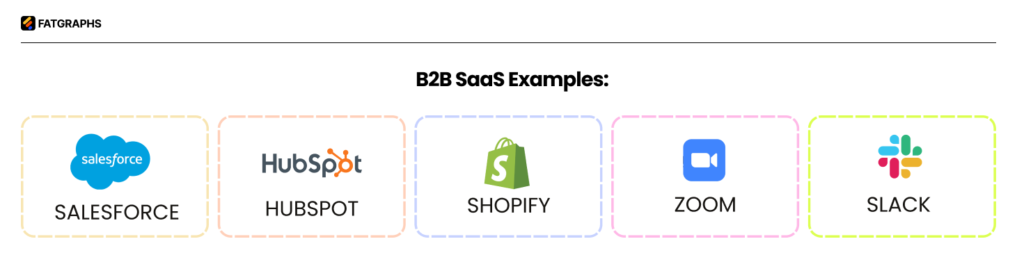
B2B SaaS (Business-to-Business Software as a Service) delivers cloud-based software solutions that help businesses grow. Companies can access these applications through the internet, which removes the need to invest heavily in hardware or infrastructure. The payment model works through recurring subscription fees that businesses pay monthly or yearly instead of buying the software outright.
What is B2C SaaS?
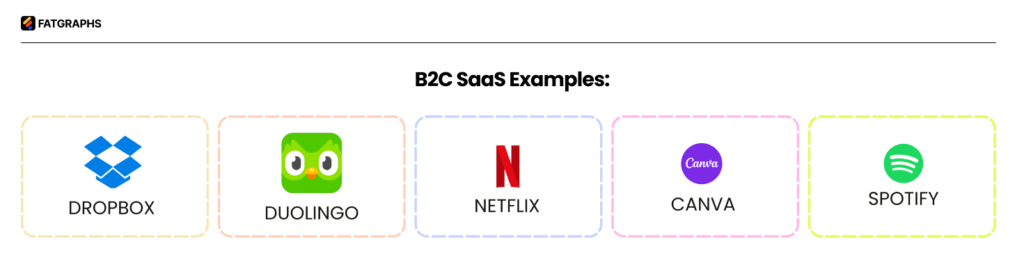
B2C SaaS (Business-to-Consumer Software as a Service) brings cloud software directly to individual users. These applications help with personal needs like entertainment, productivity, fitness, or education. B2C SaaS has made powerful software tools available to everyday users. Spotify and Netflix stand out as popular examples.
What is a B2B SaaS company?
B2B SaaS companies build and sell software solutions to other businesses. Their products solve specific business challenges and improve operations across functions like customer relationship management (CRM), enterprise resource planning (ERP), and human resources management. These companies generate revenue through subscriptions and track their success using Annual Recurring Revenue (ARR).
SaaS B2B vs B2C: Key audience differences
The most important differences between these models show up in their target audiences and how they connect with them:
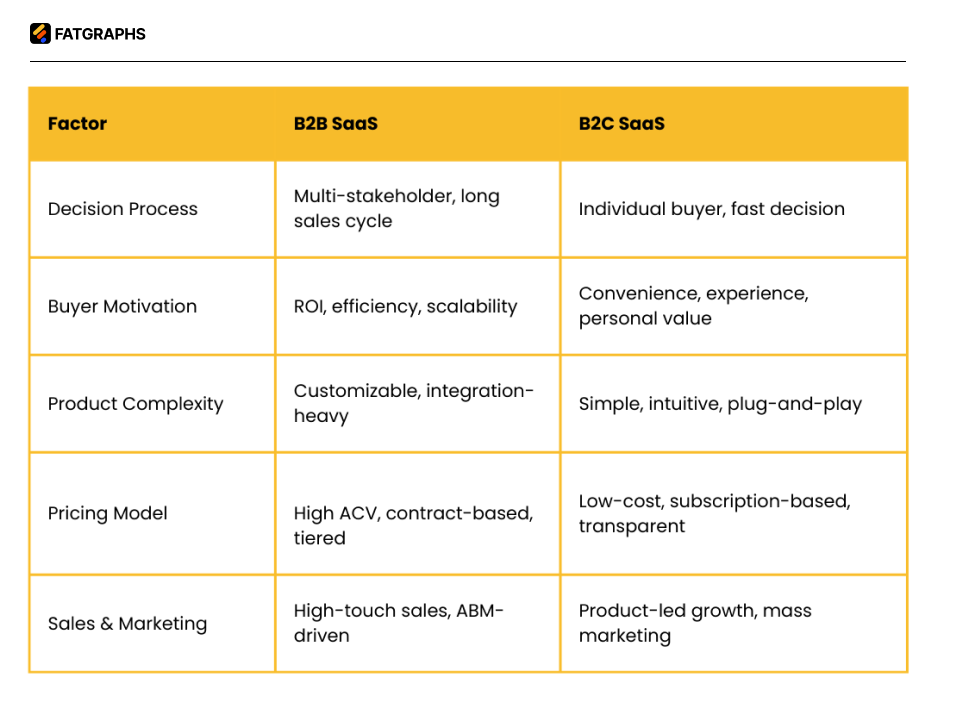
- Decision-making process: B2B sales take longer and need multiple stakeholders’ approval. B2C purchases happen faster and need less complexity.
- Technical complexity: B2B users often have deeper technical knowledge and want customizable solutions. B2C users prefer easy-to-use interfaces with minimal technical requirements.
- Value proposition: B2B solutions focus on business ROI and operational improvements. B2C products highlight personal benefits and user experience.
- Pricing structures: B2B SaaS commands higher prices based on business value. B2C offerings cost less and have simpler pricing models.
Can a SaaS Company Be Both B2B and B2C? The Hybrid Model
Yes, and some of the most successful SaaS companies in the world straddle both. This is known as the prosumer or hybrid model, and it creates unique marketing challenges and opportunities.
- Grammarly acquires millions of individual users through a free browser extension (pure B2C motion), then converts teams and enterprises through a separate B2B sales layer. Consumer trust becomes an enterprise sales asset.
- Slack sees individuals adopt the product personally, bring it into their teams, and eventually, enterprise IT standardizes on it. This bottom-up product-led growth motion uses B2C-style virality to feed a B2B pipeline.
- Notion started as a personal productivity app, then added team workspaces and enterprise controls. Two distinct pricing tiers now serve both audiences simultaneously.
- Dropbox uses free personal storage to drive adoption, then monetizes teams and businesses through Dropbox Business. The personal brand trust reduces enterprise sales friction significantly.
- Zoom runs a free consumer tier (with a 40-minute limit) alongside enterprise plans with admin controls, SSO, and compliance features. Same product, two completely different marketing motions running in parallel.
The key insight: hybrid SaaS companies need two separate marketing playbooks that share a brand identity but use distinct messaging, channels, and funnels. The most common mistake is treating both audiences as the same.
How marketing strategies differ in B2B and B2C SaaS
B2B and B2C SaaS marketing strategies show fundamental differences in several areas. These variations shape everything from how messages are crafted to the ways companies convert prospects.
1- Tone and language used in messaging
B2B marketing messages typically use formal, informed language that shows measurable value and return on investment. Messages stay logical and technical to address specific business problems. B2C SaaS messages take a different approach. They build brand loyalty through storytelling and memorable campaigns that appeal to emotions. The language remains conversational, with everyday terms that help audiences connect with the content.
2- Content types and formats
Content marketing in B2B aims to build authority through detailed resources. Well-crafted blog posts give companies a 67% advantage in lead generation. Whitepapers, case studies, and webinars dominate this space. Companies establish themselves as experts through industry reports and original research. B2C SaaS takes a different path. Visual content rules here—videos boost B2B lead conversion by 54%. They become even more vital in consumer marketing where eye-catching visuals and tailored communication drive engagement.
3- Lead generation vs brand awareness focus
B2B SaaS marketers put their energy into generating leads and building relationships. Their strategic content helps 77% of marketers reach credibility goals. Research shows B2B companies get the best results when they spend about 46% of their marketing budget on brand building and 54% on lead generation. B2C marketing takes another route. It aims for broad brand awareness through mass media channels and viral campaigns that create quick emotional connections.
4- Sales funnel structure and length
B2B sales cycles can last months or years. They involve complex stages and multiple decision-makers. These deals often mean higher-value contracts and longer evaluation periods. B2C funnels work differently. Decisions happen within hours or days. Buyers need fewer touchpoints and often buy on impulse. This basic difference influences every part of the marketing strategy, from creating content to optimizing conversions.
5- Marketing channels and automation tools
SaaS marketers employ different tools and channels based on their target audience – businesses or consumers. Their platform choices shape how well their campaigns work and affect their overall marketing strategy.
Popular platforms for B2B SaaS marketing
LinkedIn dominates the B2B SaaS landscape as B2B marketers use it to share content. The platform has become crucial to reach decision-makers and industry professionals. B2B SaaS marketers also rely on trade shows, webinars, and white papers to connect with potential customers.
1- Top channels for B2C SaaS marketing
B2C SaaS marketing runs on platforms that create entertainment and personal connections. More than 51% of B2B marketers say Instagram and Facebook are crucial to reach their target audience. B2C companies pick these platforms because they can showcase products visually and build emotional bonds with consumers.
2- Use of automation in B2B vs B2C
Both segments use automation differently. B2B marketing automation drives lead generation through person-to-person interaction. It uses email workflows, targeted campaigns, and lead scoring to nurture prospects over time. B2B organizations now run 12-20 marketing technology tools on average. B2C automation focuses on re-engagement initiatives, promotional offers, and cart abandonment notifications.
3- Email marketing and retargeting differences
B2B and B2C sectors approach email marketing differently. B2B emails support longer, multi-step buying trips with detailed information and resources. B2C emails tell stories and trigger emotions using bold images and short copy that drives quick action. B2B retargeting strategies target LinkedIn, where decision-makers gather. B2C companies prefer Facebook for interest-based targeting and quick conversions.
Customer journey and relationship building
Success in SaaS depends on customer retention more than acquisition. B2B and B2C companies show distinct differences in their approach to building lasting customer relationships.
Customer onboarding in B2B vs B2C
B2B SaaS onboarding uses high-touch processes to establish long-term partnerships and trust. Research shows 73% of customers expect better personalization as technology advances. B2C onboarding takes a different path with self-service approaches and quick time-to-value expectations.
1- Churn rate and retention strategies
B2B SaaS companies maintain lower churn rates than their B2C counterparts. Long-term contracts and higher switching costs drive this difference in B2B relationships. An increase in customer retention can boost profits, making retention a vital factor in both markets.
2- Customer support expectations
B2B customers value white-glove experiences with tailored support. B2C support takes a more independent approach through self-service channels like FAQs and blogs.
3- Role of customer success teams
B2B Customer Success Managers (CSMs) dedicate their time to quarterly business reviews, customer health monitoring, and relationship-building. The company’s experience matters as much as its products to customers. This makes success teams essential for both segments, though their approaches differ.
Conclusion
Companies need to know how to tell B2B and B2C SaaS marketing strategies apart if they want to succeed in the fast-growing SaaS market. B2B SaaS marketing needs patience. It builds relationships through professional, evidence-based content on LinkedIn. B2C SaaS runs on emotional connections and visual content instead. It aims for quick conversions through social platforms like Instagram and Facebook.
These differences go beyond marketing channels. B2B’s customer experience involves complex decisions with multiple stakeholders, while B2C customers make simpler, individual choices. B2B focuses on building long-term strategic collaborations, and B2C prioritizes smooth self-service options.
This understanding helps you shape your marketing approach for your specific audience. Your campaigns become more effective when you recognize the fundamental differences between business and consumer marketing. You can pick the right platforms and build stronger customer relationships.
The SaaS market continues to grow and create opportunities. Your success depends on knowing how to connect with your audience’s specific needs and wants. A well-crafted marketing strategy doesn’t just bring in customers; it attracts the right ones who will truly benefit from your solution.
FAQs
Q1. What are the main differences between B2B and B2C SaaS marketing?
B2B SaaS marketing focuses on building long-term relationships with businesses, using formal language and data-driven content. B2C SaaS marketing targets individual consumers, emphasizing emotional connections and quick conversions through visually appealing content.
Q2. How do sales cycles differ between B2B and B2C SaaS?
B2B SaaS typically has longer sales cycles, lasting 84-104 days on average, involving multiple stakeholders. B2C SaaS sales cycles are much shorter, often completed within hours or days, with simpler decision-making processes.
Q3. Which marketing platforms are most effective for B2B and B2C SaaS?
For B2B SaaS, LinkedIn is the dominant platform, with 94% of marketers using it to share content. B2C SaaS marketing thrives on platforms like Instagram and Facebook, with over 51% of B2C marketers considering them vital for audience connection.
Q4. How does customer onboarding differ in B2B and B2C SaaS?
B2B SaaS onboarding involves high-touch processes focused on building long-term partnerships and trust. B2C SaaS onboarding emphasizes self-service approaches with quicker time-to-value expectations.
Q5. What are the typical churn rates for B2B and B2C SaaS?
B2B SaaS companies generally experience lower churn rates at 4.67%, while B2C SaaS companies have slightly higher churn rates at 5.06%. This difference is primarily due to longer contracts and higher switching costs in B2B relationships.