
 Book Call with Haroon
Running a SaaS business is different from running a regular business. In SaaS, customers pay regularly for a product or service, usually every month or year. Because of this subscription model, tracking the right numbers is more important than ever. Just knowing your total revenue isn’t enough. You need to know if customers are sticking around, if you are making money efficiently, and if your business can grow safely.
This blog will explain the key SaaS Growth Indicators for businesses. You will learn which numbers matter, why they matter, and how they help you make smarter decisions. By understanding these key SaaS metrics, you can assess your business’s health, attract investors, and plan for the future.
Revenue Metrics: How to Check Your Income
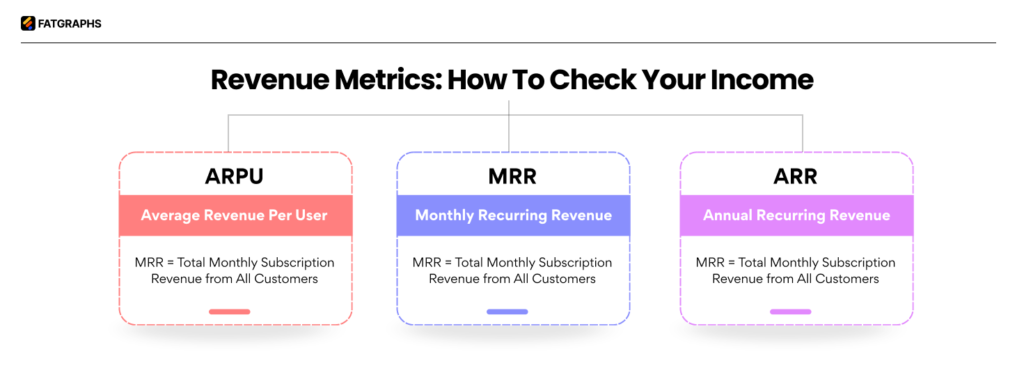
Revenue is the most obvious way to measure a business. In SaaS, revenue metrics are slightly different because they focus on recurring income rather than one-time sales. This is why Monthly Recurring Revenue (MRR) and Annual Recurring Revenue (ARR) are very important SaaS Growth Indicators.
Monthly Recurring Revenue (MRR) shows how much money your business earns every month from all active subscriptions. This number is critical because it allows you to predict future revenue and spot trends. If MRR is going up steadily, it means your business is growing. If it drops, it could indicate customers are leaving or reducing their subscriptions. Annual Recurring Revenue (ARR) is just MRR multiplied by a year. This helps you understand long-term growth and gives investors a clear picture of your business’s potential.
Another important revenue metric is Average Revenue Per User, or ARPU. This shows how much money each customer brings in on average. ARPU helps businesses understand which customers are the most valuable and how well pricing and sales strategies are working. If your ARPU increases over time, it usually means customers are buying more, upgrading plans, or using extra services.
Customer Economics: Are You Making Money on Customers?
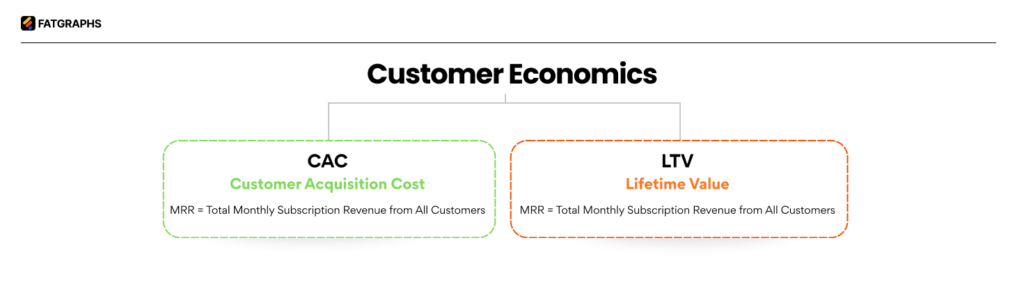
SaaS Growth Indicators aren’t just about getting new customers; it’s about getting them efficiently and keeping them profitably. Customer economics help you understand if the money you spend on sales and marketing is actually worth it.
Customer Acquisition Cost, or CAC, measures how much it costs to bring in a new customer. This includes all marketing, sales, and onboarding expenses. Keeping CAC low is important because high costs can eat into profits, even if revenue is growing.
Lifetime Value, or LTV, measures how much money a customer will generate for your business over the entire time they use your product. Comparing LTV to CAC is essential. A good rule of thumb is that LTV should be at least three times CAC. If it isn’t, it means you are spending too much to acquire customers compared to the value they bring. Monitoring LTV and CAC together ensures your growth is sustainable and profitable.
Retention and Expansion: Keeping Customers Happy
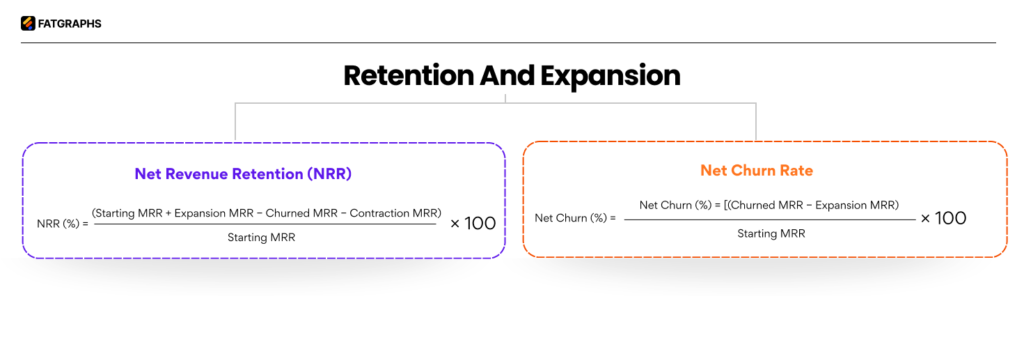
SaaS Growth Indicators doesn’t just come from acquiring new customers; it comes from keeping current customers and helping them spend more. Retention and expansion metrics tell you whether customers are happy and continuing to use your product.
Net Revenue Retention (NRR) measures how much revenue you keep from existing customers after accounting for upgrades, downgrades, and churn. A high NRR shows that customers are not only staying but also spending more over time. It’s one of the best ways to see if your product fits the market and keeps customers satisfied.
Net Churn is slightly different. It measures the revenue lost when customers cancel or reduce their subscriptions, minus any extra revenue from upgrades. High churn is a warning sign that customers are leaving or that your product isn’t meeting their needs. If you can reduce net churn while increasing upgrades, you create a strong, stable revenue base that allows your business to grow consistently.
Efficiency and Performance: Growing Without Wasting Money
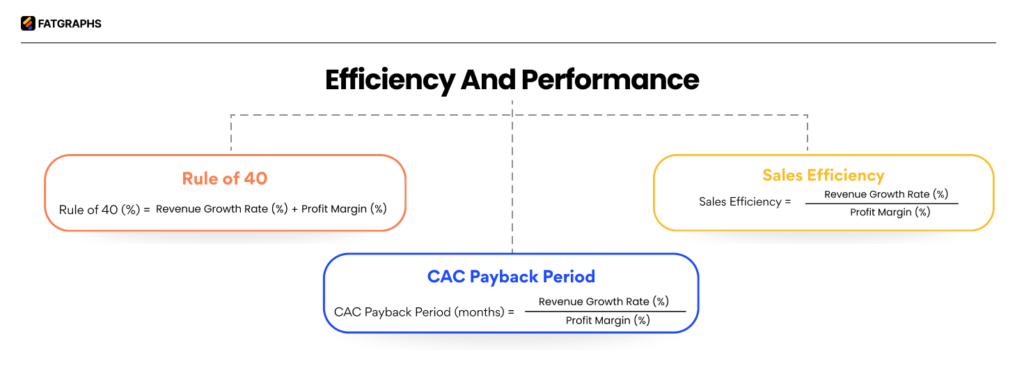
Growing a SaaS company isn’t just about making more money; it’s about making money efficiently. Efficiency metrics show how well your business is using resources to generate revenue.
The Rule of 40 is a popular benchmark for investors. It states that your growth rate plus your profit margin should be over 40 percent. This ensures your company is growing fast enough without sacrificing profitability. Companies that ignore profitability may burn cash quickly, while companies that focus only on profit may miss out on growth opportunities.
The CAC Payback Period measures how long it takes for your business to earn back the money spent to acquire a customer. Shorter payback periods are better because you can reinvest money into acquiring more customers quickly.
Sales Efficiency is another key measure. It looks at how much revenue you generate for every dollar spent on sales and marketing. High sales efficiency means your resources are being used wisely, while low efficiency suggests you may need to improve your sales process or marketing strategy.
Product Engagement: Are Customers Using Your Product?
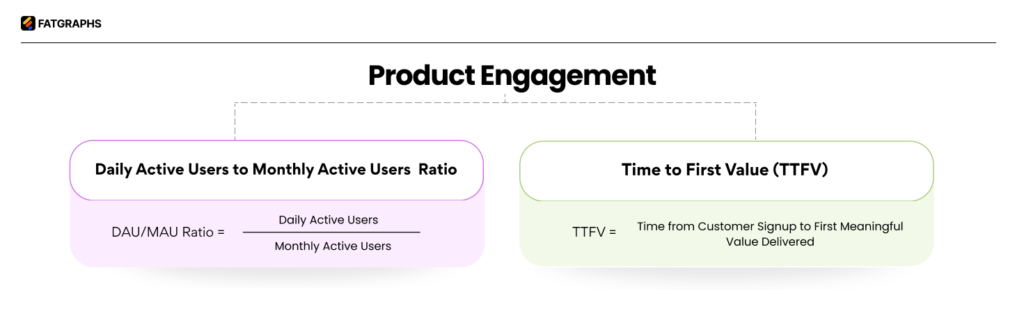
Even if you acquire customers and make money efficiently, long-term SaaS Growth Indicators depend on whether customers are actually using your product. Product engagement metrics show how active and satisfied users are.
Daily Active Users (DAU) measures how many unique users interact with your product every day. When combined with Monthly Active Users (MAU), it forms a ratio called DAU/MAU. This ratio shows how “sticky” your product is. A high ratio means users rely on your product regularly, which usually leads to better retention and less churn.
Time to First Value (TTFV) is the time it takes for a new customer to experience meaningful value from your product. The faster users see value, the more likely they are to continue using your product. Reducing TTFV is critical for onboarding, adoption, and long-term retention.
Growth Benchmarks: How to Know You’re Doing Well
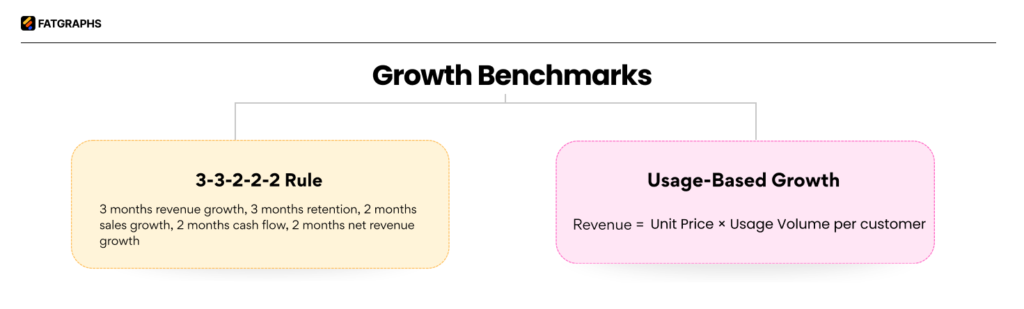
Knowing individual metrics is important, but understanding how they fit together gives a complete picture of your SaaS business. Growth benchmarks provide context and help you focus on balanced growth.
The 3-3-2-2-2 Rule is a simple way to maintain healthy SaaS growth. It focuses on maintaining three months of revenue growth, three months of customer retention, two months of sales growth, two months of cash flow, and two months of net revenue growth. Following this framework ensures that your business grows steadily without overextending resources.
Usage-based growth is another concept worth noting. In this model, customers pay based on how much they use your product. This can lead to faster growth because revenue scales with usage, but it can also be unpredictable if usage fluctuates. Monitoring usage trends carefully is key to managing this type of SaaS Growth Indicators.
Using Metrics Together to Make Smart Decisions
The most powerful insight comes from using metrics together rather than in isolation. For example, comparing MRR with CAC and LTV helps you understand if your acquisition strategies are sustainable. Tracking NRR alongside product engagement can reveal if churn is caused by product issues or other factors. Using the Rule of 40 together with sales efficiency shows whether your growth is profitable and scalable.
By integrating all these metrics, SaaS leaders can make better decisions, allocate resources more effectively, and focus on actions that maximize both revenue and customer satisfaction. It creates a clear roadmap for growth, reduces risks, and helps businesses adapt to changing market conditions.
Conclusion
SaaS Growth Indicators cannot be managed without the right metrics. Revenue, customer economics, retention, efficiency, and engagement metrics all play a critical role in understanding the health of a SaaS business. MRR, ARR, ARPU, CAC, LTV, NRR, DAU, and TTFV are more than numbers that guide strategy and decision-making.
For founders, executives, and investors, focusing on these key SaaS Growth Indicators ensures sustainable growth, reduces risks, and strengthens customer relationships. Measuring what truly matters allows SaaS businesses to grow confidently, attract investment, and plan for long-term success.