
 Book Call with Haroon
The BANT framework helps you stop chasing prospects who will never buy. Developers created this lead qualification method in the 1950s, and it helps salespeople identify high-quality leads that have a strong chance of becoming customers. BANT Framework helps you work smarter instead of harder. You can focus your time and energy on deals that are actually worth closing.
When sales teams qualify leads effectively, they improve pipeline quality and reduce wasted effort. Strong sales and marketing alignment also helps teams focus on opportunities that are more likely to convert. We will explain what BANT stands for and walk through the 4-step qualification process in detail. We will also share specific questions you can ask prospects and explain when this framework works best for your sales organization.
What is the BANT Framework

BANT is a sales qualification framework that helps you check if a prospect has the basic requirements needed to make a purchase. This method gives you a clear way to decide early if a deal is worth your time. It helps you spend your effort on opportunities that actually matter.
The BANT framework is a simple method that helps sales teams assess whether a prospect is a good fit and ready to buy. Teams often use it at the start of the sales process to confirm the basic conditions of a deal before going deeper. Many large companies use BANT to quickly check many leads, confirm if they are serious buyers, and focus their advanced sales strategies on the opportunities that already show basic buying potential. The framework also helps manage customer relationship systems and sales pipelines.
The 4-Step BANT Process
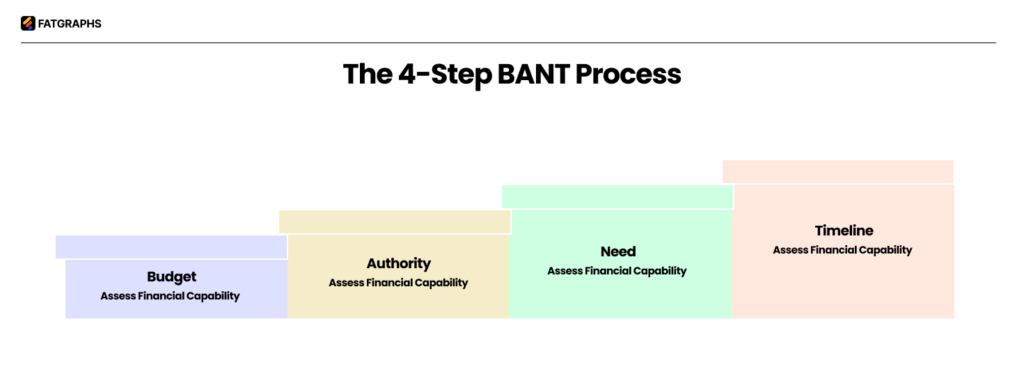
Using the BANT framework sales method requires a clear and organized approach to each part of the framework. Sales teams become more effective when they carefully evaluate budget, authority, need, and timeline instead of treating them as simple checkboxes.
Step 1: Budget – Assess Financial Capability
Budget qualification is not only about checking if a prospect can afford your product. The real question is whether they believe your solution is valuable enough to spend money on it. Many businesses can adjust their budgets if they see a strong business benefit.
Asking “What is your budget?” too early in a conversation can cause problems. It might make you appear more interested in money than in helping the customer. A better approach is to ask three types of questions instead of asking directly about the budget at the beginning.
| 1: Understand the Value of Solving the Problem | Ask about the results they want to achieve and estimate the financial value of reaching those goals. |
| 2: Learn About Their Current Spending | Ask if they are already using another solution and how much they are paying for it. |
| 3: Confirm Their Willingness to Invest | Ask if they would move forward if your solution helped them achieve their goals |
It is important to frame budget discussions around results instead of costs. Talk about the improvements your solution can create before discussing price. Show how the investment can generate measurable returns and help them achieve their goals.
Step 2: Authority – Identify Decision Makers
In most B2B sales situations, several people are involved in the buying decision. Research shows that the typical buying group includes 6 to 10 stakeholders. Each person may have different priorities and opinions, which makes the decision process more complex.
- A decision maker is not always the person who signs the contract. Many people influence the buying process. Salespeople must understand this group of stakeholders, often called the buying committee.
- Research on thousands of sales opportunities shows that deals without involvement from a decision maker are much less likely to close.
- For large enterprise deals, the chance of closing can drop dramatically if the real decision makers are not included.
- Ask who will use the product and how purchasing decisions are usually made in their company. Ask who was involved in similar purchases before and whether it would be useful to include other stakeholders in future meetings.
- Understanding authority helps avoid surprises later in the sales process. If the person you are speaking with does not have decision-making power, you should try to connect with the person who does.
Step 3: Need – Understand Pain Points
Understanding the prospect’s problems is essential for successful selling. Pain points are the challenges or frustrations that businesses want to solve. These problems may be related to operations, finances, technology, or customer experience.
| Financial pain points | Affect the company’s costs or profits |
| Productivity pain points | Slow down or make work more difficult |
| Process pain points | Come from inefficient workflows or outdated systems |
| Support pain points | Occur when customers do not receive enough help or guidance from a product or service |
The Four Fs Strategy to Identify Pain Points
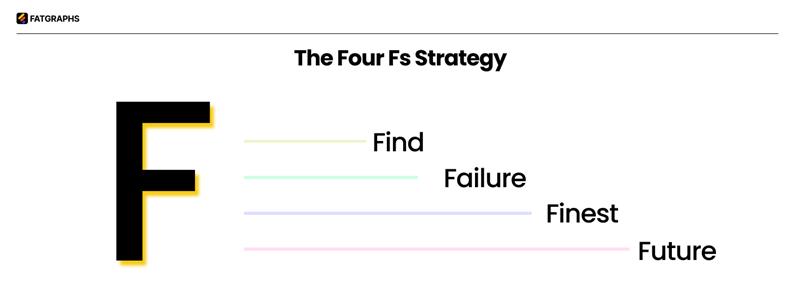
One useful method for identifying pain points is called the Four Fs strategy.
- First is Find. Talk with the customer to understand the challenges they are facing and the goals they want to achieve.
- Second is Failure. Ask about situations where their current solutions did not work well or where they felt disappointed.
- Third is Finest. Ask about the best experiences they have had with products or services. This helps you understand what they value most.
- Fourth is Future. Ask about their long-term goals and how a new solution could help them grow or improve.
Ask Questions to Understand the Full Problem
➺ Salespeople should ask questions to understand when the problem first appeared, why the prospect started looking for a solution, and what steps they have already taken.
➺ Asking too many questions can feel like an interrogation, while asking too few might not reveal enough information.
➺ Open-ended questions are usually the most effective because they encourage prospects to explain their problems in detail.
Step 4: Timeline – Determine Purchase Timeline
Timeline qualification focuses on when the prospect plans to make a decision. Without a clear timeline, deals can drag on for months or even years without progress.
- Understand Your Average Sales Cycle First
Before discussing timelines, it is useful to understand the average sales cycle for your product. Low-priced products usually have shorter sales cycles, while expensive solutions often require longer decision processes because more stakeholders are involved.
For example, SaaS products with annual contracts under five thousand dollars usually have an average sales cycle of about forty days. However, products with annual values above one hundred thousand dollars may have sales cycles lasting around one hundred seventy days.
- Identify What Triggered the Conversation
Sales teams should try to understand what started the conversation with the prospect. Sometimes a contract is ending, a competitor is entering the market, or company leadership has set new goals. These events can create urgency and push companies to act faster.
- Look for Trigger Events That Create Urgency
Salespeople should also look for trigger events such as budget planning periods, leadership changes, or new projects. These events often create opportunities for new solutions.
- Ask About Deadlines and Decision Milestones
Ask prospects if they have a specific deadline for implementing a solution or if upcoming projects depend on solving the problem. Also, ask about internal milestones such as approvals, vendor evaluations, or budget approvals.
- Separate Real Buyers From Casual Interest
Timeline qualification also helps separate casual interest from serious buying intent. Prospects planning to buy soon are often stronger opportunities, while those planning far in the future may require follow-up later.
BANT Framework Questions to Ask Prospects
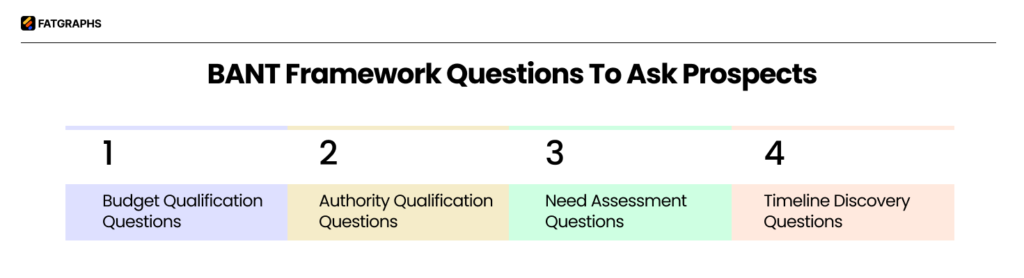
The success of BANT framework depends on asking the right questions. The questions you ask during discovery calls determine whether you uncover real buying signals or simply have surface-level conversations.
1- Budget Qualification Questions
Budget questions should feel consultative, not transactional. Instead of asking directly about the budget, ask about current spending on similar solutions or whether they already use a competitor. Shift the conversation toward value by asking what return on investment they expect and what the problem costs if it remains unsolved.
Also, ask which department would fund the purchase; this helps identify key stakeholders and decision makers. Finally, connect your solution’s potential results, such as time savings or revenue growth, with the budget they may have planned.
2- Authority Qualification Questions
Authority questions help map the group of people involved in the decision. When many stakeholders participate in B2B purchases, you must understand the decision structure. You can ask who else will be involved before moving forward. Ask about their typical process for evaluating vendors and how previous purchasing decisions were handled.
To identify the final decision maker, ask who has the authority to approve the purchase. Also, ask who manages the budget for this type of investment. Understanding who will use the product daily is also important because user feedback often influences the final decision. These questions help reveal the entire decision-making group and prevent surprises later in the sales cycle.
3- Need Assessment Questions
Need-focused questions help uncover the real problems your prospect wants to solve. Start with questions about the challenges they are currently facing and what motivated them to search for a solution. Then ask how the problem affects their team’s productivity or business results. This helps measure the impact of the problem and creates urgency.
You can also ask what would happen if the issue remains unsolved for several months. This helps highlight the cost of doing nothing. Another helpful question is asking what solutions they have tried before and why those solutions did not work. Ask about their current tools and whether those tools meet their needs. Ask what success would look like after implementing a new solution. This helps define clear goals that your product should achieve.
4- Timeline Discovery Questions
Timeline questions help reveal when the prospect plans to make a decision. You can ask what created the urgency to solve the problem now. This helps identify important events driving the search for a solution. Ask when they expect to implement a solution and whether there is a deadline they must meet.
It is also helpful to ask what factors might delay or stop the purchase. This allows you to address potential obstacles early. Ask whether they are currently evaluating other solutions. This helps you understand the competitive situation. Ask about important milestones in their decision process so you can align your sales efforts with their schedule.
Key Benefits of Using BANT
BANT framework improves lead qualification by helping sales teams identify prospects with a strong chance of becoming customers. It increases sales efficiency because teams spend less time on unqualified leads and more time on real opportunities.
The framework also supports better decision-making by focusing on the key factors that influence whether a deal will close. Because BANT is simple, sales representatives can learn it quickly and begin applying it almost immediately.
Common Challenges with BANT
Although BANT is useful, it has some limitations. If salespeople treat it like a strict checklist, they might ignore deeper customer needs.
- Overusing BANT questions can also make conversations feel robotic or scripted. Salespeople must keep their conversations natural and build genuine relationships with prospects.
- Another limitation is that the BANT framework focuses mainly on needs that the customer already recognizes. It may not always uncover hidden problems that customers have not yet discovered.
- BANT may feel too simple for very complex B2B sales that involve many stakeholders and unpredictable timelines.
Conclusion
BANT remains a powerful sales qualification method when it is used thoughtfully instead of mechanically. It helps sales teams identify real buying signals early and protects valuable time. Sales teams that manage high lead volumes and transactional deals often benefit the most from this framework.
The key to success is asking questions in a natural and consultative way while building trust with prospects. By creating your own qualification questions and applying the BANT framework consistently, you can improve the quality of your pipeline and focus on the deals most likely to close.