
 Book Call with Haroon
MQL and SQL (Marketing Qualified Leads and Sales Qualified Leads) play distinct but connected roles in the sales process. MQLs are prospects who have engaged with your marketing efforts, like downloading resources, attending webinars, or visiting your website multiple times, but aren’t yet ready to buy. They sit at the top or middle of your sales funnel, showing interest and curiosity about your solutions. Identifying MQLs accurately allows marketing teams to nurture them effectively and prepare them for the next stage.
SQLs, on the other hand, are leads that have progressed further and demonstrate clear buying intent. These prospects are ready for direct sales contact, often requesting demos, asking detailed questions, or comparing pricing options. Understanding the differences between MQL and SQL is critical for B2B companies to streamline lead qualification, align marketing and sales teams, and boost overall conversion rates from initial engagement to closed deals.
What is an MQL, and what does it mean in marketing?
Marketing teams need better ways to spot promising prospects. The concept of a Marketing Qualified Lead (MQL) is a vital part of your sales process.
➧ Definition of MQL
A Marketing Qualified Lead represents a prospect who shows real interest in your company’s product or service through marketing interactions. An MQL is a lead that your marketing team has reviewed and found more likely to become a customer than other leads based on specific criteria. These prospects have moved past basic awareness and shown genuine interest in your offerings, but they’re not ready for sales conversations yet.
MQLs mark the first step in a lead’s trip toward becoming a customer. Marketing teams have checked these leads thoroughly, but they need more nurturing before the sales team steps in. Companies that use buyer personas to define their MQLs report better quality leads.
➧ Common behaviors of MQLs
MQLs reveal their interest through specific patterns. You need to answer two basic questions to identify an MQL: Does the lead care about your company? And do you want this lead as a customer?
Your team can track how potential leads interact with marketing content to measure their interest level. This means watching page views, form submissions, material downloads, and webinar attendance. Your team also looks at job titles, industry type, company size, and roles to see if leads match your ideal customer profile.
Real MQLs connect with your brand multiple times. They don’t just stop by once. These prospects want to learn more about your solutions but haven’t started talking to sales yet.
➧ Examples of MQL actions
Here are the key actions that usually show when a prospect becomes an MQL:
- Downloading trial software, ebooks, or whitepapers
- Attending webinars or virtual events
- Subscribing to your email newsletter or blog
- Using software demos or interactive features
- Filling out online forms or providing contact information
- Creating wishlists or adding items to shopping carts
- Visiting your site repeatedly or spending lots of time on your pages
- Clicking on paid ads and browsing multiple website pages
Your marketing team can spot when an MQL is ready to become an SQL by watching these behaviors. Many companies add a simple question to their forms: “Would you like to talk to our sales team?” This lets leads tell you directly when they’re ready for sales conversations.
What is an SQL and how is it different from an MQL?
Prospects who move past their original interest enter a critical phase in your sales pipeline. At this point, sales qualified leads (SQLs) become the main focus of your conversion strategy.
➧ Definition of SQL
A sales-qualified lead is a prospect that both marketing and sales teams have evaluated and who shows clear buying intent. Unlike MQLs, who are still researching options, SQLs are ready to solve a specific problem with your solution. These prospects have moved beyond the engagement phase and earned the SQL designation, which means they’re ready for targeted conversion efforts.
➧ Key traits of SQLs
SQLs have unique characteristics that set them apart from other prospects. These leads have clearly shown they want to buy and meet specific qualification criteria. You’ll notice they have:
- A clear need for your product or service
- Real interest in what your company offers
- Budget available to make the purchase
- Authority to make decisions in their organization
SQLs sit at the bottom of your sales funnel, making them your most valuable leads. While a sale isn’t guaranteed, they’re much more likely to become customers than marketing qualified leads or cold contacts. So these leads deserve more direct sales approaches, including product demos, detailed specs, and tailored solutions that address their specific needs.
➧ Examples of SQL behaviors
Your team can spot SQLs by watching for specific behaviors that show prospects are ready to buy. SQLs often:
- Ask for product demonstrations or consultations
- Check pricing pages multiple times
- Send detailed questions in response to nurture emails
- Look at bottom-funnel content like case studies or product comparisons
- Read competitor comparison pages or integration documentation
It also shows when SQLs sign up for trials, schedule discovery calls with sales teams, or look into pricing options. These actions show they’re further along in their buying trip; they’re not just collecting information but actively evaluating specific solutions for their needs.
MQL and SQL: Key differences
You need to understand how prospects move from curious browsers to paying customers. This requires clear knowledge of your sales funnel operations and where different lead types fit.
| Comparison Point | MQL (Marketing Qualified Lead) | SQL (Sales Qualified Lead) |
| Funnel Stage | Top / Middle (Awareness–Interest) | Bottom (Decision–Action) |
| Primary Owner | Marketing Team | Sales Team |
| Intent Level | Interest | Purchase Intent |
| Engagement Type | Content consumption | Direct sales interaction |
| Goal | Nurture and educate | Convert and close |
| Qualification Basis | Behavioral + demographic fit | Buying readiness + qualification criteria |
| Content Interaction | Blogs, ebooks, webinars | Demos, pricing pages, case studies |
| Buying Signals | Repeated visits, downloads | Demo requests, pricing inquiries |
| Sales Contact | Not ready yet | Ready for outreach |
| Lead Scoring | Moderate score | High score threshold met |
| Decision Authority | May not be a decision-maker | Often, a decision-maker or influencer |
| Budget Clarity | Unclear or undefined | Budget discussed or validated |
| Urgency | Exploring options | Defined timeline |
| Conversion Probability | Moderate | High |
| Handoff Trigger | Reaches scoring threshold | Meets sales qualification criteria |
Sales funnel stages explained
A typical sales funnel has distinct stages that help prospects make purchase decisions. It starts with awareness at the top. The middle section covers the interest and evaluation phases. The bottom focuses on decision-making and action. This well-laid-out path helps you deliver the right message as leads advance toward purchase.
1- How MQLs fit into the top and middle funnel
MQLs exist in the awareness and interest stages of your funnel’s upper to middle sections. These prospects find their problems or begin to research possible solutions. They usually participate in educational content like blog posts, guides, and webinars. They compare options but don’t show direct buying intent yet. You could call it “window shopping.” They show interest but aren’t ready for sales discussions.
2- How SQLs fit into the bottom funnel
SQLs belong at your funnel’s bottom, in the decision and action stages[183]. These valuable leads show clear purchase intent and welcome direct sales contact. They’ve moved past simple information gathering and now evaluate specific vendors and solutions. These prospects ask for demos, talk about pricing details, and bring in other decision-makers, like “checking their wallet”.
Why timing matters in lead qualification
Quick responses to qualified leads substantially affect conversion rates. Teams that respond within five minutes see higher engagement and conversion rates compared to the average 42-hour response time. Enthusiastic leads might explore competitor options or lose interest without proper timing. Knowledge of your lead’s funnel position helps deliver appropriate messages at the right time. This prevents potential customers from slipping through qualification gaps.
How to move leads from MQL to SQL effectively
The path from interested prospects to sales-ready leads needs a systematic approach. You can create an efficient path from MQL to SQL and boost your conversion rates with these proven strategies.
1-Use lead scoring to track engagement
A resilient lead scoring system helps you prioritize prospects based on their likelihood to convert. Your scoring model should combine fit and intent signals to gauge lead quality accurately. Companies that use precise lead scoring models see conversion rates improve by 35% when sales and marketing teams agree on qualification criteria. You can create a complete picture of lead readiness by assigning points for key actions like content downloads, website visits, and email engagement.
2- Monitor behavioral signals
High-intent behaviors indicate purchase readiness. Research shows that email open rates above 30% and reply rates over 10% associate with higher SQL conversions. Your prospects show strong intent when they:
- Visit pricing pages repeatedly
- Download case studies or technical documentation
- Request product demonstrations
- Involve themselves with bottom-funnel content
3- Apply the BANT framework
More than 52% of salespeople find the BANT framework (Budget, Authority, Need, Timeline) reliable for qualifying leads. This well-laid-out approach helps you determine if prospects have:
- Financial resources to afford your solution
- Decision-making power within their organization
- Specific problem your product can solve
- Clear timeframe for purchasing decision
4- Use automation to route leads
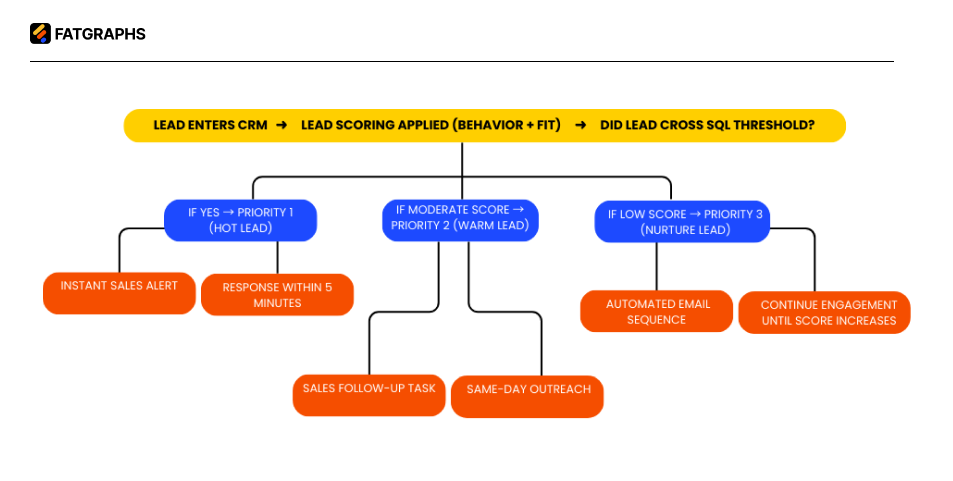
Your CRM should combine smoothly with the lead scoring system to create immediate lead management. Studies reveal that responding to leads within five minutes increases contact chances by 900%. You should set up automated triggers that notify sales when high-scoring leads meet your thresholds. Create priority tiers for different lead types:
- Priority 1: Hot leads requiring immediate response (< 5 minutes)
- Priority 2: Warm leads needing same-day follow-up
- Priority 3: Nurture-ready leads for automated sequences
5- Align sales and marketing teams
Clear definitions and handoff processes between departments make a difference. A standardized Service Level Agreement (SLA) should specify what marketing delivers and how quickly sales acts on leads. Both departments can work toward common goals through regular feedback sessions that refine qualification parameters.
Conclusion
The difference between MQL and SQL plays a key role in building a working sales pipeline. This piece shows how these lead types differ and why proper qualification affects your conversion rates. The trip from marketing qualification to sales readiness needs strategic planning and teamwork across departments.
Sales and marketing teams need to work together; it’s the biggest factor in successful MQL-to-SQL conversion. Teams that use shared definitions and clear handoff processes see higher revenue growth compared to organizations where departments work separately.
Curious prospects become predictably paying customers. Knowing how to spot where leads fit in this process and sending the right message at the right time determines your success. With clear definitions, proper qualification methods, and optimized processes, you can improve how your organization turns marketing leads into sales opportunities and loyal customers.
FAQs
Q1. What’s the main difference between MQL and SQL?
MQLs (Marketing Qualified Leads) are prospects who have shown interest in your products or services through engagement with marketing efforts. SQLs (Sales Qualified Leads) are further along in the buying process, demonstrating clear purchase intent and readiness for direct sales interactions.
Q2. How do MQLs contribute to the sales process?
MQLs play a crucial role in the early stages of the sales funnel. They engage with marketing content, helping identify potential customers who are interested in your offerings but may need further nurturing before they’re ready for sales conversations.
Q3. What actions typically indicate that a lead has become an SQL?
Actions that often signal SQL status include requesting product demonstrations, visiting pricing pages multiple times, engaging with bottom-funnel content like case studies, and setting up discovery calls with sales personnel.
Q4. How can companies effectively move leads from MQL to SQL?
To move leads from MQL to SQL, companies can implement lead scoring systems, monitor behavioral signals, apply the BANT framework, use automation for lead routing, and ensure strong alignment between sales and marketing teams.
Q5. Why is timing important in lead qualification?
Timing is critical in lead qualification because responding promptly to qualified leads significantly impacts conversion rates. Research shows that teams responding within five minutes experience much higher engagement and conversion rates compared to slower response times.