
 Book Call with Haroon
Your LinkedIn outreach gets opened, but nobody responds because you’re treating connections like conversations. The real issue behind No Replies on LinkedIn Outreach is not visibility, but misaligned messaging after connection acceptance. The issue isn’t your open rates; it’s that you’re confusing access with interest, and your follow-up messages read like sales pitches instead of business conversations. This is the core pattern behind No Replies on LinkedIn Outreach campaigns across SaaS founders and B2B marketers.
Mark built a private AI system for law firms. Mark’s experience is a textbook example of No Replies on LinkedIn Outreach, where acceptance is mistaken for intent. He spent weeks crafting connection requests to 100+ lawyers. Six accepted his connection requests. Zero replied to his follow-up messages. His approach? Connect first, then pitch the product benefits in the next message.
Mark believed that getting the connection was the hard part. What happened was lawyers accepted his connection because his initial request seemed reasonable, but his follow-up message immediately revealed he was there to sell something. What changed his perspective was realizing that lawyers who accept random connections aren’t necessarily lawyers who have contract review problems they’re actively trying to solve.
This pattern repeats across every founder I’ve worked with who focuses on LinkedIn connection rates instead of response rates. They optimize the wrong metric and wonder why their “warm” connections feel ice cold. This is another variation of No Replies on LinkedIn Outreach, where messaging tone overrides targeting quality.
The Problem Isn’t Your Connection Request
Martin runs ContentSource.io, targeting marketing agencies worldwide. Their LinkedIn messaging was part of a broader campaign that included LinkedIn Ads and YouTube. The messages got delivered, connections got accepted, but the follow-up conversations died immediately.
Martin thought their niche focus was the problem; maybe their target was too specific. What actually happened was their messages positioned them as another vendor trying to sell something rather than someone who understood the specific sourcing problems agencies face daily. What changed was shifting from product-focused messages to problem-focused conversations.
The issue wasn’t reaching the right people. Creative teams do need better content sourcing tools. The issue was that their messages communicated “I have a product” instead of “I understand your workflow.”
Most founders assume connection acceptance means interest in their solution. But LinkedIn connections form for dozens of reasons unrelated to buying intent. People accept connections to expand their network, appear responsive, or simply because they recognize your industry.
Your Follow-up Message Destroys Everything
Tom built booboo.dev, a developer tool. His Reddit ads generated 800+ clicks with a 3% CTR after adding video content. But zero signups converted from those clicks. His LinkedIn approach followed the same pattern for good initial engagement, complete conversion failure.
Tom believed his positioning and copy were the problems. What actually happened was his messaging worked fine for generating interest but completely failed at communicating specific value that developers could immediately understand and act on. What changed was realizing that developers don’t sign up for tools; they sign up to solve specific problems they’re experiencing right now.
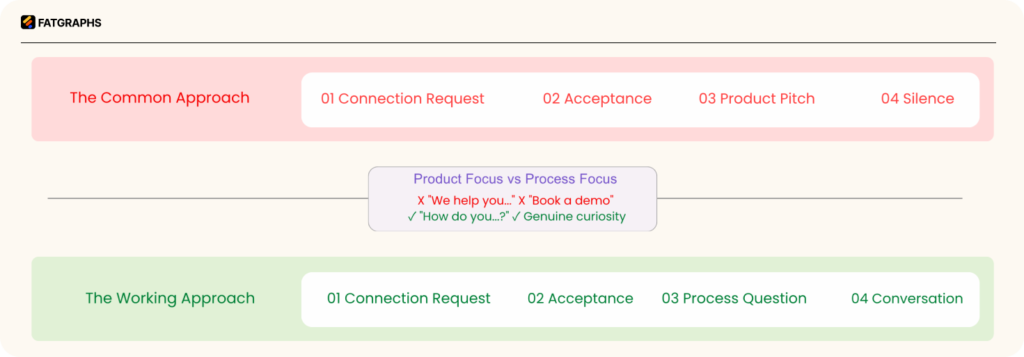
This demonstrates the core LinkedIn outreach strategy failure: your connection request gets accepted because it’s vague enough to seem harmless, but your follow-up message is so product-focused that it immediately triggers sales resistance.
The gap between connection and conversation happens in that first follow-up message. You have someone’s attention for exactly one message after they accept your connection. Most founders waste it on product features instead of demonstrating understanding of their actual situation.
The LinkedIn Response Framework
The LinkedIn Response Framework is a three-step approach that separates connection building from problem validation. It works by treating each message as a separate conversation with a distinct purpose rather than a sales sequence.
Apply it by following this structure:
Step 1: Connect with Context
Your connection request mentions a specific situation they’re likely experiencing, not your product. “Noticed you’re scaling your agency’s content sourcing process” works better than “I’d like to connect to discuss ContentSource.io.”
Step 2: Question Before Pitching
Your first follow-up message asks about their current process, not about their interest in your solution. “How are you currently handling licensing verification for stock content?” generates responses. “I’d love to show you how ContentSource.io can streamline your workflow” generates silence.
Step 3: Reference Before Recommending
Only after they describe their current situation do you reference how others in similar situations have solved this. “Two agencies I work with were doing exactly what you described; here’s what changed for them” creates curiosity. Leading with your product features creates resistance.
When LinkedIn Outreach Actually Works
The founders who get responses through LinkedIn outreach share one characteristic: they demonstrate knowledge of their prospect-specific operational reality before mentioning their solution.
Celik built an online reservation system for restaurants after using it in his own establishment. His Facebook ads failed completely, but his approach showed he understood restaurant operations from direct experience. The challenge wasn’t his product knowledge; it was translating that operational understanding into outreach messages that felt like peer conversations rather than vendor pitches.
Successful LinkedIn outreach happens when your messages read like they’re from someone who has worked in their industry, not someone trying to sell to their industry. The difference is specificity about their actual workflows versus generic pain points anyone could Google.
Bottom Line
No Replies on LinkedIn Outreach happens when founders optimize for connection acceptance instead of conversation relevance. LinkedIn outreach fails because founders treat connections like qualified leads instead of conversation opportunities. Your open rates don’t matter if your follow-up messages immediately signal you’re there to sell something. Focus on demonstrating operational understanding of their situation before introducing your solution. Ask about their current process before explaining your product’s benefits. Reference similar situations you’ve seen before recommending your approach.
Common Questions
1- Why do people accept my LinkedIn connections but not respond to messages?
They accept connections to appear responsive or expand their network, not because they have purchasing intent. Connection acceptance doesn’t indicate interest in your product; it indicates willingness to add you to their professional network.
2- Should I mention my product in the LinkedIn connection request?
No. Mention a situation they’re likely experiencing that relates to your product category. Product mentions in connection requests signal sales intent and reduce acceptance rates from qualified prospects.
3- How long should I wait for LinkedIn connection acceptance and follow-up?
Send your follow-up message within 24 hours while your name is still recognizable. Waiting longer reduces response rates because they forget who you are and why they connected.
4- What’s the difference between a good and bad LinkedIn follow-up message?
Good messages ask about their current process. Bad messages explain your product’s benefits. “How are you currently handling [specific workflow]?” Get responses. “I’d love to show you how [product] can help” gets ignored.
5- How many LinkedIn messages should I send before giving up?
Two messages maximum. If they don’t respond to your second message, they’re either experiencing the problem you solve, or they’re not interested in discussing solutions with vendors.