
 Book Call with Haroon
Marketing channels for B2B SaaS directly influence lead quality, customer acquisition cost, and long-term revenue growth. Because SaaS companies deal with longer sales cycles and multiple decision-makers, choosing the right channels is not optional; it is a growth strategy. Some channels generate an immediate pipeline, while others build sustainable inbound demand and lower costs over time. Understanding how different marketing channels for B2B SaaS perform in terms of cost, speed, and revenue impact allows you to allocate budget wisely and scale with confidence.
What is B2B SaaS marketing?
B2B SaaS marketing is about promoting cloud-based software to other businesses through subscription plans. Instead of selling to individual customers, you are selling to companies. The people you target are usually managers, directors, or business owners who decide which software their company should buy. They care about how the software improves work, saves time, reduces costs, and helps the business grow.
Key differences from B2C marketing
| Aspect | B2B Marketing | B2C Marketing |
|---|---|---|
| Target Audience | Decision-makers are buying software for their company | Individual customers buying for personal use |
| Buying Focus | Business goals, efficiency, return on investment | Personal benefits, convenience, emotions |
| Sales Process Length | Long process, often several months | Short process, sometimes minutes or hours |
| Decision Involvement | Multiple departments involved (IT, finance, procurement, leadership) | Usually, one person decides |
| Research Behavior | Buyers research online, read whitepapers, attend webinars, and compare options before speaking to sales | Buyers may research briefly or purchase quickly |
| Content Requirements | Must explain clear benefits, real examples, and business value | Often focuses on appeal, features, and ease of use |
| Pricing Structure | Higher pricing based on business value | Lower pricing with a simpler structure |
| Customer Goal | Long-term subscription, retention, and upgrades | One-time purchase or short-term use |
Read More: What is the Difference between B2B and B2C SaaS Marketing?
Why Marketing channels for B2B SaaS matter for growth
Marketing channels for B2B SaaS are the different ways you promote your software, such as search engines, social media, email, or events. Choosing the right channels can strongly affect how fast your company grows. For SaaS businesses, distribution is critical.
You must find effective ways to get your product in front of the right businesses. In early-stage SaaS companies, marketing is responsible for a large part of new revenue. Different channels have different purposes. Some bring quick leads, while others help build long-term trust and brand awareness. The best choice depends on your product type and the complexity of your buying process.
How to measure channel effectiveness
To understand if your marketing is working, you need to track data. Important measures include website traffic, number of leads, and how many of those leads turn into customers. You should focus on finding out which channels bring qualified leads and which ones help move customers through your sales process. By studying this data, you can adjust your strategy and spend more on what works best.
Best marketing channels for B2B SaaS
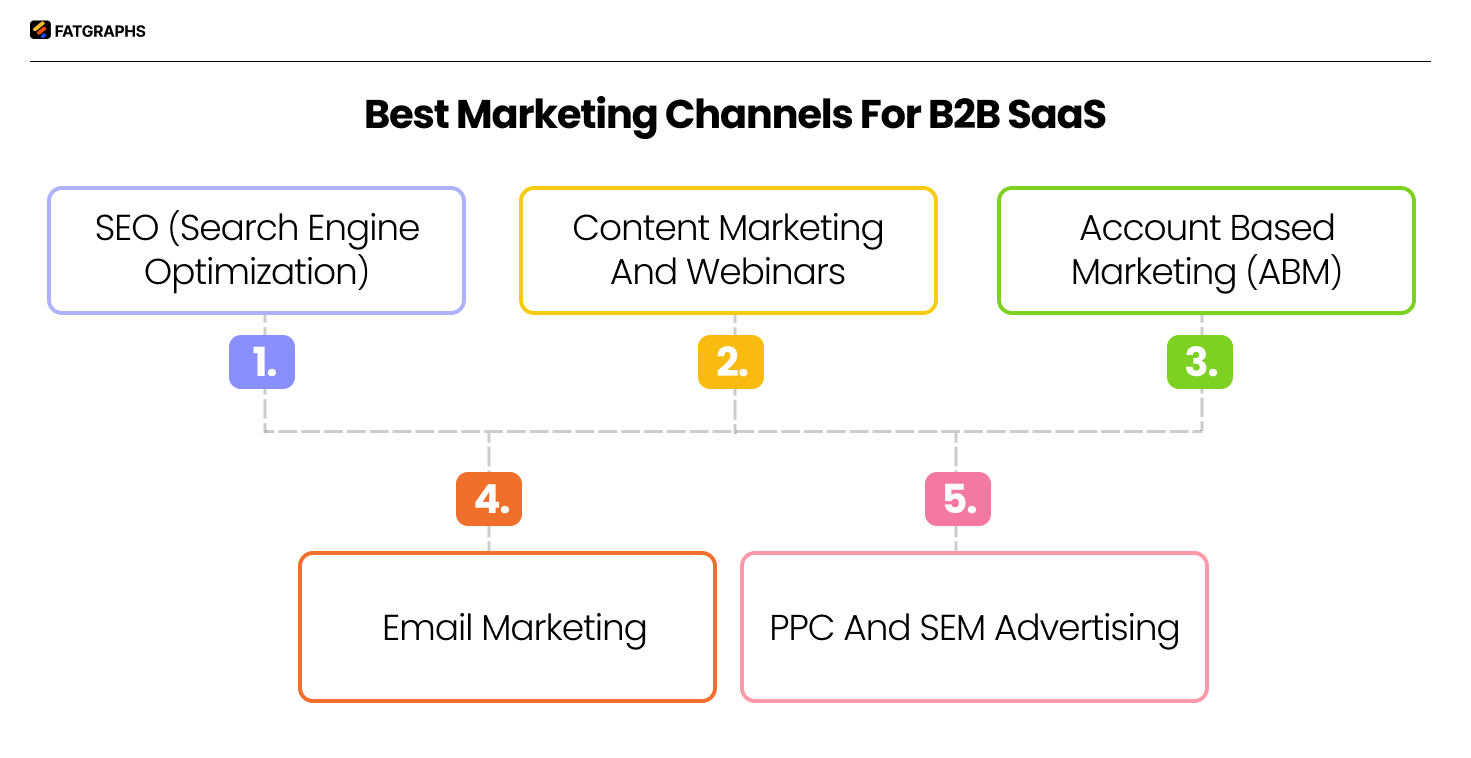
Your choice of Marketing channels for B2B SaaS affects how quickly you gain customers and how much it costs you. Each channel plays a different role in your overall marketing strategy.
1- SEO (Search Engine Optimization)
SEO helps your website appear in search results when people look for software solutions like yours. This means you attract visitors who are already interested in what you offer. SaaS SEO takes time to show strong results. It can take several months before you see steady growth. However, once your content ranks well, it can keep bringing visitors for a long time with little extra cost. SEO can lower customer acquisition costs over time. It also supports other marketing channels for B2B SaaS by giving potential customers more chances to find and trust your brand.
2- PPC and SEM advertising
PPC (Pay-Per-Click) and SEM (Search Engine Marketing) allow you to place paid ads on search engines. These ads appear when users search for specific keywords. Paid search gives you quick visibility. You can start getting clicks and leads soon after launching a campaign. Many businesses aim to earn more revenue than they spend on ads.
Ads placed at the top of search results usually receive more clicks. Longer and more specific keywords often bring better-quality leads because they match clear user intent. For SaaS companies, it is important to make sure ad spending leads to profitable results.
3- LinkedIn Advertising
LinkedIn is useful for reaching professionals and business decision-makers. You can target people based on job title, company size, industry, or even specific companies. LinkedIn advertising can produce high-quality leads, especially for SaaS companies with longer sales cycles. However, it can be more expensive than other ad platforms. It is important to track not just clicks, but also the number of qualified leads and how much those leads contribute to your sales pipeline.
4- Account-Based Marketing (ABM)
Account-Based Marketing focuses on specific high-value companies instead of a wide audience. You treat each target company as its own market. This approach often leads to better results because your messaging is personalized. Instead of sending the same message to everyone, you create campaigns that address the exact needs of each company. ABM helps reduce wasted marketing spend and can improve win rates by focusing on the accounts that matter most.
5- Email Marketing
Email marketing is one of the most cost-effective marketing channels for B2B SaaS. Businesses often see strong returns from well-planned email campaigns. Welcome emails usually receive high open rates. Sending emails based on user behavior, such as signing up for a demo or downloading a guide, can improve engagement. Regular follow-up emails during the sales process can also increase the chances of closing a deal. Emails sent to people who already showed interest usually perform better than cold outreach emails.
6- Content Marketing and Webinars
Content marketing includes blog posts, guides, case studies, and videos that educate your audience. Many B2B buyers rely on content to make purchasing decisions. Buyers often read multiple pieces of content before choosing a solution. Creating helpful and informative content builds trust and shows expertise.
Webinars are especially effective for generating leads. They allow you to explain your product in detail and answer questions live. Compared to physical events, webinars are usually much cheaper. Following up quickly after a webinar can improve conversion rates.
Comparing Marketing Channels for B2B SaaS
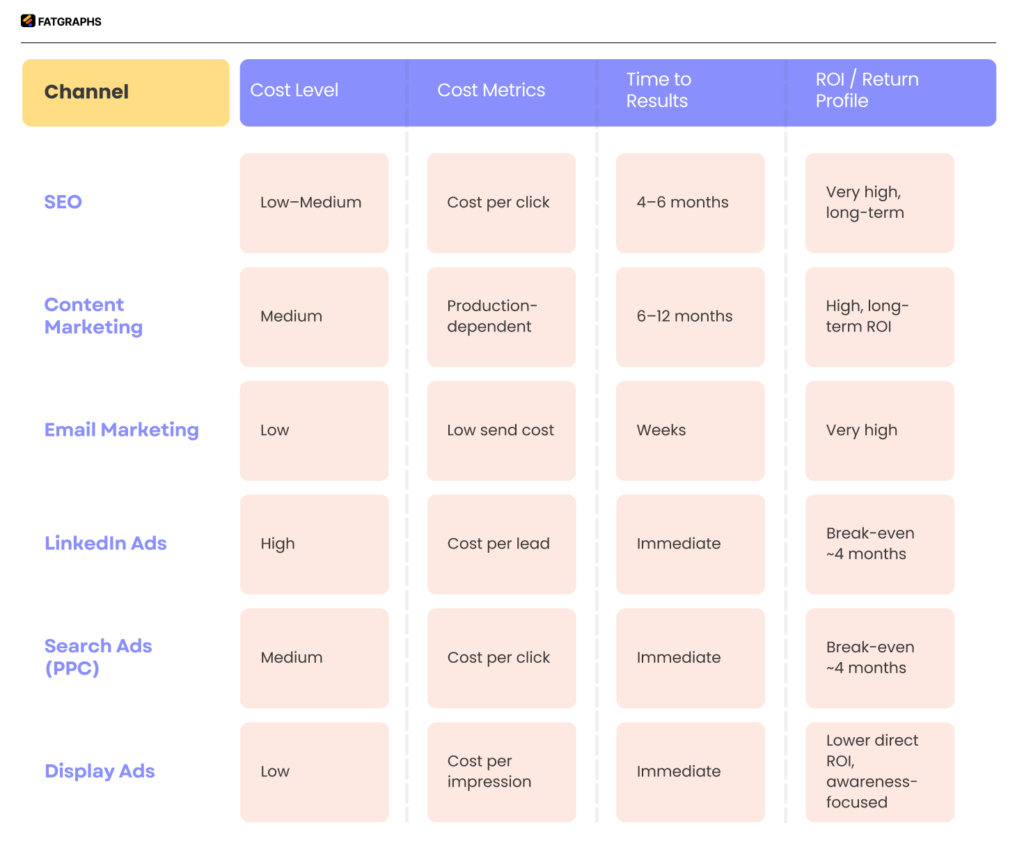
Not all marketing channels for B2B SaaS deliver the same results. You need to understand costs and timelines before deciding how to spend your budget.
Cost considerations for each channel
The cost per lead varies by channel. SEO is usually one of the most affordable options in the long run. Search ads charge you each time someone clicks on your ad. LinkedIn ads are often more expensive per lead compared to search ads.
Display ads can provide cheaper impressions, but they may not always bring highly qualified leads. Overall, customer acquisition costs in B2B SaaS can range widely depending on your target market and product price.
Expected ROI and time to results
SEO can deliver strong long-term returns, but it takes several months to see consistent results. Content marketing also requires patience and steady effort.
Email marketing can show results within weeks if done correctly. Paid advertising provides immediate visibility and can start generating leads quickly, though you must carefully manage spending to stay profitable.
Which channels work best together
The best results often come from combining channels. For example, you can use LinkedIn ads to target decision-makers, SEO to bring steady website traffic, and email marketing to nurture leads.
Using multiple channels together creates a consistent experience for potential customers. When people see your brand in different places, they are more likely to trust and choose your product.
How to build your B2B channel marketing strategy
Building a strong B2B SaaS marketing strategy requires careful planning before spending your budget. A clear strategy helps you grow steadily instead of wasting money.
Assess your target audience and budget
Start by identifying where your ideal customers spend their time online. Look at the websites they visit, the blogs they read, the social media platforms they use, and the keywords they search. Divide your audience into groups based on their budgets, needs, decision-makers, challenges, and goals. Then choose marketing channels for B2B SaaS that fit both your audience and your available budget.
Start with one channel and scale gradually
Do not try to use too many channels at once. Begin with one or two channels that match your goals. Once you see positive results, you can expand to additional channels. Focusing your efforts helps you create a stronger and more consistent brand experience. As you grow, you can combine two or three channels to increase impact.
Track metrics and optimize performance
Measure customer acquisition cost, customer lifetime value, and churn rate to understand how well each channel performs. If a channel is not delivering results, adjust your strategy or move your budget to better-performing channels. Regular testing, such as A/B testing of ads or emails, can help improve performance. Reviewing your data often ensures your marketing stays effective and efficient.
Conclusion
Choosing the right marketing channels for B2B SaaS business means balancing quick results with long-term growth. Instead of spreading your budget across many options, focus on two or three channels that match your audience and budget.
Combining channels such as SEO, LinkedIn, and email marketing can strengthen your results. By tracking your performance and adjusting your strategy based on real data, you can build a strong and lasting customer acquisition system.
FAQs
Q1. Which marketing channels deliver the fastest results for B2B SaaS companies?
Paid advertising channels like PPC and SEM provide quick visibility and can start generating leads soon after launch. Email marketing can also show results within weeks. SEO and content marketing take longer to produce steady results, but they offer stronger long-term value.
Q2. How much should I expect to spend per lead on different B2B SaaS marketing channels?
Lead costs vary depending on the channel. SEO is usually more affordable over time. Search ads charge per click, while LinkedIn ads often cost more per lead. Overall customer acquisition costs in B2B SaaS can range widely depending on your industry and target market.
Q3. Should I focus on multiple marketing channels or start with just one?
It is better to start with one or two channels that fit your audience and budget. Once you understand how they perform, you can expand to additional channels. Focusing your resources helps you achieve better results in the early stages.
Q4. What ROI can I expect from SEO compared to other marketing channels for B2B SaaS?
SEO can deliver strong long-term returns compared to many other channels. It reduces customer acquisition costs over time and continues bringing traffic long after content is published. However, it requires patience and consistent effort before showing clear results.
Q5. How do I determine which marketing channels are right for my B2B SaaS business?
Start by understanding where your ideal customers spend time online and how they research solutions. Segment your audience based on their needs and decision-making process. Then choose marketing channels that fit your budget, business goals, and expected outcomes.