
 Book Call with Haroon
Treating every customer the same way can waste your marketing budget and bring poor results. You need to understand B2B vs B2C marketing because businesses and individual consumers need different approaches. B2B marketing focuses on selling products or services to other businesses. It usually has longer sales cycles and involves several people in the decision.
B2C marketing focuses on selling to individual consumers. It often uses emotional storytelling and eye-catching campaigns. The main difference between B2B vs B2C marketing is the message and target audience. B2B businesses focus on long-term relationships and clear results. B2C companies focus on creating quick emotional appeal. This blog explains both strategies to help you choose the right one for your business.
What is B2B Marketing?
B2B means business-to-business. It refers to companies that sell products or services to other companies instead of individual shoppers. In B2B marketing, the goal is to reach decision-makers inside organizations, such as managers or executives. These people decide based on how a product helps the company solve problems, save money, or reach goals.
Examples of B2B products include project management software like Adobe Workfront, cloud storage services like Dropbox, and communication tools like Slack. A SaaS marketing agency that creates social media content for other companies is also a B2B business.
What is B2C Marketing?
B2C means business-to-consumer. It refers to companies that sell directly to individual customers. Consumers buy products or services for personal use, or for their family and friends. For example, buying clothes, snacks, or a car for yourself is a B2C purchase.
Many well-known brands are B2C companies, such as Amazon, Walmart, Google, Facebook, and streaming services like Netflix. B2C sales usually happen faster than B2B sales. Most purchases are lower in price and often made quickly.
How B2B vs B2C Marketing Work
B2B vs B2C marketing involve selling to people. However, the way they connect with customers is very different. B2B marketing focuses on building long-term relationships. The buying process can take weeks or months. Companies want detailed information before making a decision.
B2C marketing focuses on quick decisions. Businesses try to create strong emotions and attract customers fast. The relationship is usually more about the brand experience than personal contact. Some companies use both models. For example, Adobe sells products to businesses and also to individual users.
Key Differences Between B2B vs B2C Marketing
➦ Target audience differences
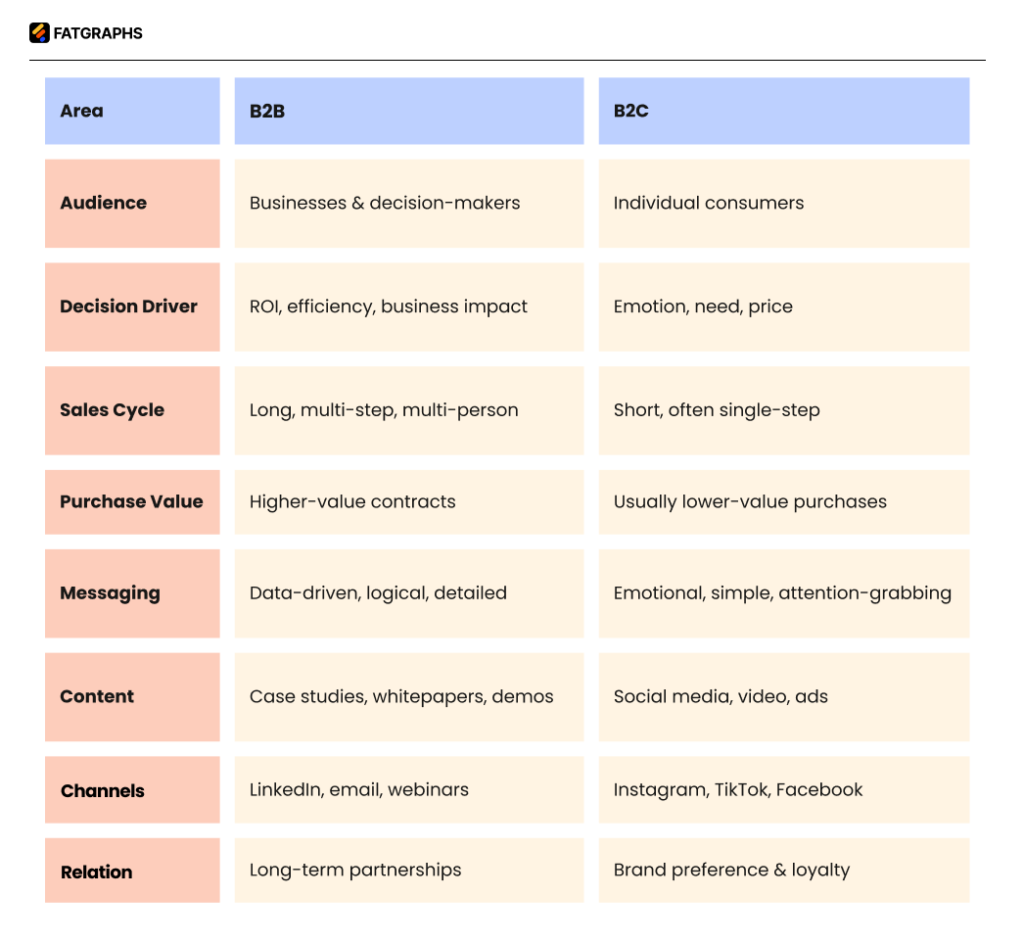
B2B marketing targets businesses and professionals such as managers, executives, or team leaders. These buyers look at cost, efficiency, and long-term value. Often, more than one person is involved in the decision. B2C marketing targets individual customers. These buyers make their own decisions based on personal needs, wants, and emotions. The audience is usually much larger than in B2B markets.
➦ Sales cycle and decision-making process
The B2B sales cycle is usually longer. Businesses take time to compare options, review budgets, and get approvals from different departments. B2C buying decisions are usually faster. Many purchases are made quickly without much research. Consumers can complete a purchase in minutes.
➦ Messaging and content approach
B2B messaging is more detailed and professional. It focuses on facts, data, and how the product improves business results. Companies use tools like case studies, reports, and product demonstrations. B2C messaging focuses more on emotions. It uses storytelling, attractive visuals, and simple messages to catch attention quickly.
➦ Marketing channels comparison
B2B marketers often use professional marketing channels like LinkedIn, email marketing, webinars, and company websites. They also attend conferences and networking events. B2C companies use social media platforms such as Instagram, TikTok, and Facebook to reach large audiences. Influencers and online ads also play a big role.
➦ Relationship building vs emotional connection
B2B marketing focuses on building strong, long-term relationships based on trust. Companies often assign account managers to support clients over time. B2C marketing focuses on creating emotional connections with the brand. Customers may become loyal to a brand, but they usually do not have personal relationships with company staff.
Effective B2B Marketing Strategies
Successful B2B marketing needs special strategies because of the longer sales process and multiple decision-makers.
1- Intellectual influence and content marketing
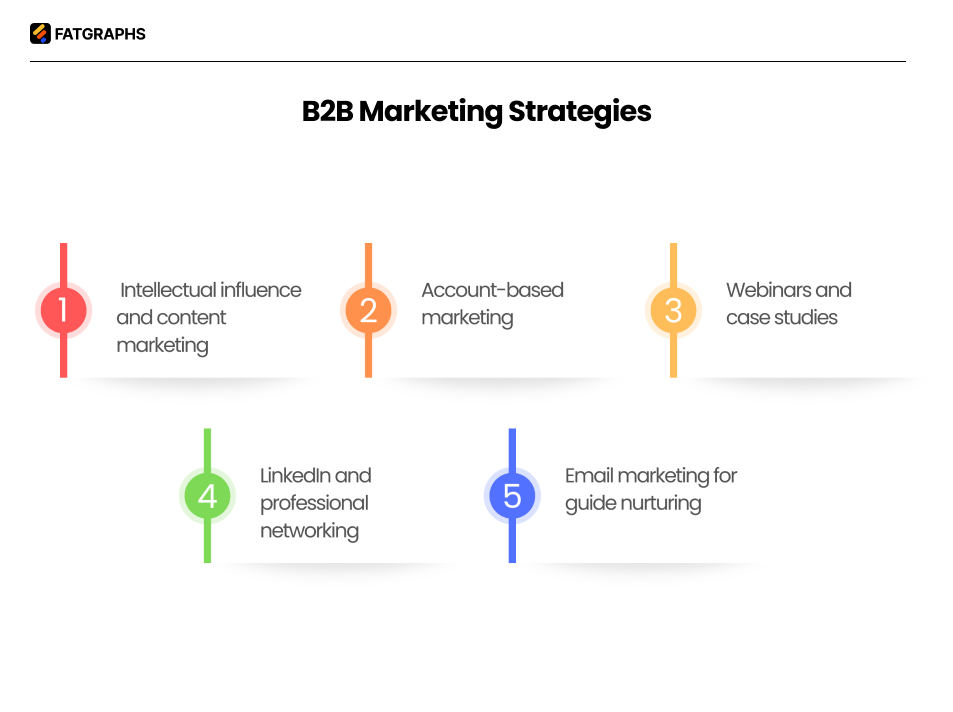
Creating helpful and informative content builds trust. When companies share expert knowledge, research, and real examples, they become trusted advisors instead of just sellers. This type of content can include blog posts, case studies, research reports, and practical guides.
2- Account-based marketing
Account-based marketing (ABM) focuses on important business clients and treats each one as a separate market. Companies create personalized campaigns for specific organizations and decision-makers. This approach helps align marketing and sales teams and makes communication more focused and relevant.
3- Webinars and case studies
Webinars allow companies to teach potential clients about their products and share expert knowledge. They also give businesses a chance to answer questions directly. Case studies show real success stories. They help build trust by proving that the product works in real situations.
4- LinkedIn and professional networking
LinkedIn is a major platform for B2B marketing. Companies share industry updates, connect with professionals, and build brand awareness. In-person networking events, trade shows, and conferences are also important for building business relationships.
5- Email marketing for guide nurturing
Email marketing helps businesses stay in touch with potential clients. Companies send personalized messages based on where the buyer is in the decision process. Automated emails can respond to actions such as downloading a guide or filling out a form. This helps move potential clients closer to making a purchase.
Proven B2C Marketing Strategies
B2C marketing focuses on quick engagement and emotional appeal.
1- Social media marketing
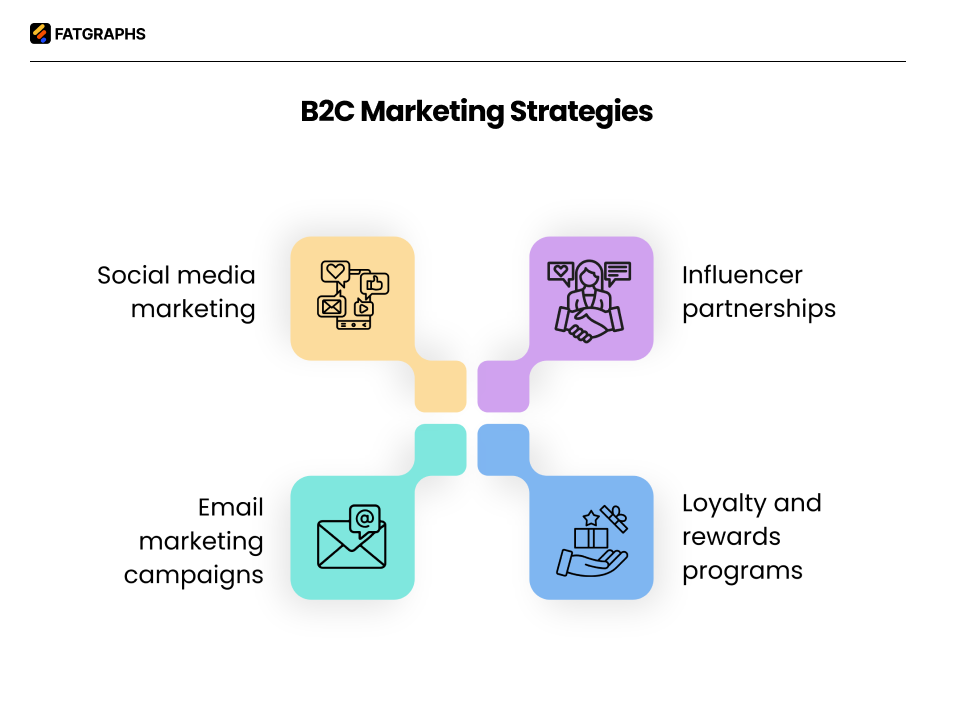
Platforms like Instagram, TikTok, and Snapchat help brands reach large audiences. Businesses use photos, short videos, and interactive content to connect with customers.
2- Influencer partnerships
Influencers promote products to their followers. Because followers trust influencers, their recommendations can strongly affect buying decisions. Smaller influencers often have close relationships with their audiences and can help brands reach specific groups.
3- Email marketing campaigns
Email marketing in B2C focuses on special offers, discounts, and reminders. For example, companies send messages when customers leave items in their online shopping cart. Personalized emails increase the chances that customers will open and read them.
4- Loyalty and rewards programs
Loyalty programs encourage customers to return. Points systems, rewards, and special offers make customers feel valued and increase repeat purchases.
5- Paid advertising and retargeting
Paid ads appear on websites and social media platforms. Retargeting ads show products that customers have already viewed. This reminds them to complete their purchase and increases the chance of a sale.
Conclusion
B2B vs B2C marketing require different strategies. B2B marketing focuses on logic, long-term relationships, and detailed information. B2C marketing focuses on emotion, quick decisions, and strong brand appeal. To choose the right strategy, think about who your customers are and how they make buying decisions. Understanding these differences will help you spend your marketing budget wisely and improve your results.
FAQs
Q1. What is the main difference between B2B vs B2C marketing?
B2B marketing targets businesses and decision-makers using logical and detailed content. B2C marketing targets individual consumers using emotional and engaging messages. The biggest difference is the sales process and the type of audience.
Q2. How long does a typical B2B sales cycle take compared to B2C?
B2B sales usually take longer because several people are involved in the decision. B2C sales are usually much faster and can happen within minutes.
Q3. Which marketing channels work best for B2B companies?
B2B companies often use LinkedIn, email marketing, webinars, company websites, and networking events to reach professionals.
Q4. Why is account-based marketing effective for B2B companies?
Account-based marketing focuses on important business clients with personalized strategies. This makes communication more relevant and increases the chances of success.
Q5. What role does emotional connection play in B2C versus B2B marketing?
In B2C marketing, emotional connection helps attract customers and build brand loyalty. In B2B marketing, trust and long-term professional relationships are more important than emotional appeal.