
 Book Call with Haroon
SaaS marketing has special challenges that make it different from traditional marketing. Software products are not physical items, which makes them harder to promote compared to products you can see or touch. Understanding what SaaS marketing is and how to use SaaS marketing strategies is very important for success in 2026.
This article explains everything you need to know about B2B SaaS marketing. The effective SaaS marketing strategies and advanced methods that help businesses grow. We also explain the main metrics you should track to measure how well your SaaS marketing strategy is working.
What is SaaS Marketing and Why It’s Different
SaaS marketing is about promoting software that people use online through subscriptions. SaaS means Software-as-a-Service. Instead of installing software on a computer, users access it through the internet. As a SaaS marketer, your job is to build brand awareness, find the right audience, guide potential customers through the sales process, and keep them engaged at every stage.
SaaS marketing focuses on building long-term relationships with customers. Unlike traditional product marketing, you are not just making one sale. You are encouraging customers to keep their subscriptions and continue paying regularly. Your work does not stop after a purchase. You must continue educating and supporting customers.
Key Differences from Traditional B2B Marketing
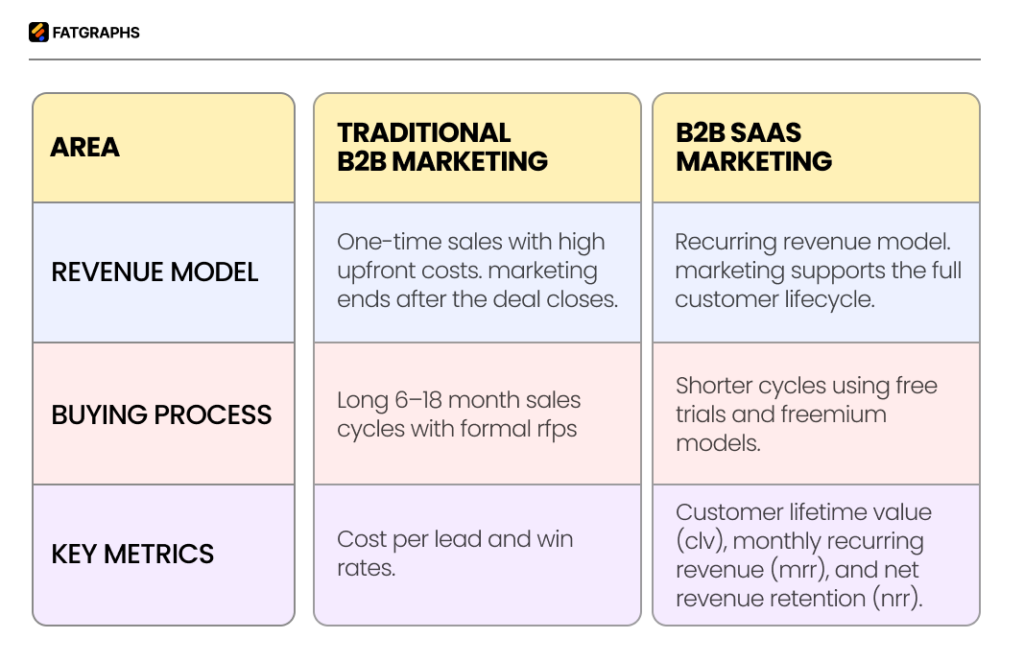
Traditional B2B marketing usually focuses on one-time purchases that involve large upfront payments. The marketing process often ends after the sale is completed. In B2B SaaS marketing, revenue comes from ongoing subscriptions. This means you are responsible for the entire customer journey, not just the first sale.
The buying process is also different. Traditional B2B purchases can take a long time and often involve formal approval processes. SaaS buying decisions are often faster because customers can try the product through free trials or freemium models. This allows them to see the value before fully committing.
The metrics you track are different as well. Traditional marketing focuses on cost per lead and closing deals. SaaS marketing focuses more on Customer Lifetime Value, Monthly Recurring Revenue, and customer retention.
SaaS Marketing Strategies for 2026
Successful SaaS marketing requires using different channels because B2B buyers research products carefully before making decisions. The following strategies form the foundation of strong SaaS marketing.
➥ Become a Niche Expert
Search engines now reward brands that show real expertise. Building authority helps your company become trusted. You need deep knowledge in your niche. You can develop this through continuous learning and real-world experience. Share insights through research, analysis, and helpful educational content that solves your audience’s problems.
➥ Create Video Content That Converts
Video content can improve conversion rates. People who watch product videos are more likely to become customers. Video is one of the most popular content formats today. Keep explainer videos short so viewers stay interested. Product demos, customer testimonials with real results, and tutorial videos are very effective. Many people say watching a video helps them decide to buy a product or service.
➥ Build Your Social Media Presence
Social media helps build relationships and increase revenue. When customers feel connected to a brand, they are more likely to choose it over competitors. LinkedIn is especially important for SaaS companies. Post regularly and mix educational content with case studies and behind-the-scenes updates.
➥ Focus on Demand Generation Over Lead Generation
Demand generation builds awareness before customers are ready to buy. Most potential customers are not ready to purchase immediately. Demand generation creates interest through helpful content. Lead generation then turns that interest into actual leads. Many marketing-qualified leads never become customers, which is why building real demand is more effective than simply collecting many leads.
➥ Invest in Organic SEO
SEO brings steady website traffic that can grow over time. Paid advertising can stop when the budget runs out, but SEO continues to attract visitors. Your SaaS SEO strategy should include technical improvements and keyword research that targets real customer problems. Create helpful content that matches what people are searching for.
➥ Utilize Paid Advertising Campaigns
Paid advertising gives you quick visibility and precise targeting. Google Ads can help you compete for important keywords. LinkedIn Ads allow you to reach business decision-makers. Adding video to email marketing can increase engagement. Webinars are also effective for generating high-quality leads.
Advanced SaaS Marketing Tactics That Drive Growth
Once you master the basics, advanced strategies help you grow faster and target high-value customers more effectively.
1- Implement Account-Based Marketing
Account-based marketing focuses on specific high-value companies instead of targeting a wide audience. Many companies find that ABM delivers stronger results than traditional methods. This strategy starts with a carefully selected list of important accounts.
You need to define your Ideal Customer Profile using company data and technology information. Then divide accounts into groups based on their potential value. Some accounts may need personalized plans, while others can be grouped together. Sales and marketing teams must work closely together for ABM to succeed.
2- Use Hyper-Personalized Targeting
Hyper-personalization uses real-time data and artificial intelligence to create customized experiences for each user. Many buyers expect personalized experiences during their journey. Companies that use personalization often see better engagement and higher conversion rates.
3- Build Referral and Influencer Programs
Referral customers often convert faster and stay longer. People are more likely to trust recommendations from friends. Create a referral program with attractive rewards for both the person referring and the new customer. Service credits, premium features, and reward levels based on performance can work well. Influencer marketing can also increase your reach because many customers follow influencer content.
4- Free Trials and Demos
Product demos can increase conversions. Free trials give users a chance to experience your product before paying. Some companies require credit card details, while others do not. Making onboarding simple with interactive tutorials and helpful communication improves results.
How to Measure SaaS Marketing Success
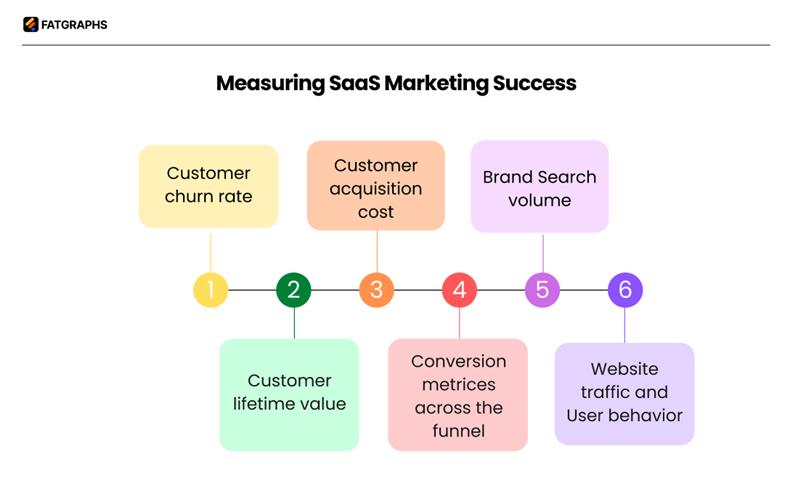
Tracking SaaS marketing metrics helps you understand what drives growth and where to improve. The right metrics turn data into useful insights that guide your strategy.
1- Website Traffic and User Behavior
Monthly unique visitors show how many people visit your website each month. This metric is most useful when combined with conversion rates. High traffic with low conversions may mean your messaging needs improvement. Low traffic with high conversions suggests you should focus on increasing awareness. Study which content performs best and attracts quality leads.
2- Brand Search Volume
Brand search volume shows how often people search for your company name. This reflects brand awareness and interest. Tools like Google Trends or SaaS SEO platforms can help you track this over time.
3- Conversion Metrics Across the Funnel
Website conversion rates show how well your site turns visitors into leads or customers. Track each funnel stage separately, such as visitor-to-lead and lead-to-customer conversions. Strong conversion rates suggest you are attracting the right audience.
4- Customer Acquisition Cost (CAC)
CAC measures how much money you spend to gain each new customer. You calculate it by dividing total sales and marketing costs by the number of new customers. Breaking CAC down by channel helps you see which strategies are most effective.
5- Customer Lifetime Value (CLV)
CLV estimates the total revenue a customer brings during their relationship with your business. You can calculate it using average monthly revenue and churn rate. A healthy business ensures that CLV is much higher than CAC to stay profitable.
6- Customer Churn Rate
Churn rate measures how many customers stop using your service during a specific time period. A high churn rate can indicate problems with your product or customer experience. Track both customer churn and revenue churn. Using payment recovery systems can help reduce revenue loss from failed payments.
Challenges of Marketing a Software
Marketing software can be difficult because it is not a physical product. You cannot show something that customers can hold or see directly. This makes it harder to explain its value. There are thousands of SaaS companies around the world, and new ones are launched every year. This makes competition strong and standing out more challenging.
The SaaS industry continues to grow rapidly, which increases competition even more. Many products are similar, so businesses must clearly explain what makes them different. You need to communicate your value clearly while educating customers about how your software helps their business.
Conclusion
SaaS marketing requires a different approach than traditional B2B marketing. Success depends on building long-term relationships instead of focusing only on one-time sales. Combine content expertise, video marketing, and account-based strategies to build strong growth.
Pay close attention to your metrics. Track CAC, CLV, and churn rate to understand what works and where to improve. Start with one or two strategies that match your current resources, then expand as you see progress. The companies that succeed in 2026 will be those that provide value throughout the entire customer journey.
FAQs
Q1. What makes SaaS marketing different from traditional marketing?
SaaS marketing focuses on subscription models and long-term customer relationships instead of one-time sales. It continues throughout the customer lifecycle and focuses on metrics like Customer Lifetime Value, Monthly Recurring Revenue, and retention rather than just cost per lead and deal closures.
Q2. Should I focus on paid ads or organic marketing for my SaaS product?
Organic marketing often provides stronger long-term benefits, especially for companies with limited budgets. SEO and content marketing create steady growth over time. However, combining organic strategies with paid advertising usually produces the best results.
Q3. How can I market my SaaS product with no budget?
You can focus on participating in online communities where your target audience spends time. Provide helpful advice and solve problems before promoting your product. Share your development journey publicly and create content that addresses specific challenges.
Q4. What metrics should I track to measure SaaS marketing success?
Key metrics include Customer Acquisition Cost, Customer Lifetime Value, churn rate, conversion rates, Monthly Recurring Revenue, and website traffic quality. These help you understand profitability and growth.
Q5. Why is customer retention so important for SaaS businesses?
Customer retention strongly affects profitability in subscription businesses. Keeping existing customers is easier and more cost-effective than constantly finding new ones. Strong retention also creates opportunities for upselling and expanding revenue.